Deadly Collision Rocks Bangkok
A catastrophic crash between a freight train and a passenger bus in Bangkok, Thailand has killed at least eight people and left dozens more injured, according to Thai authorities. The collision, one of the deadliest rail incidents in Thailand in recent memory, occurred at a level crossing in the Thai capital, sending shockwaves through local communities and reigniting urgent calls for rail safety reform.
Driver Tests Positive for Drugs
Thai police confirmed that the freight train's driver tested positive for drugs following the collision, a development that has become a central focus of the investigation. Authorities have not yet specified which substances were detected, but the positive test has raised serious questions about screening and oversight protocols for rail workers in Thailand.
If drug use is confirmed as a contributing factor, it could spark a broader reckoning within Thailand's state railway operator about how it monitors staff fitness for duty, particularly for freight operators who work long overnight routes with little supervision.
The Scene of the Crash
Emergency responders flooded the scene after the freight train slammed into the bus, which was crossing the tracks. Witnesses described scenes of chaos as passengers were trapped in the wreckage. Dozens of people were transported to nearby hospitals, with some reported to be in serious condition.
Images from the scene showed the front of the bus crushed by the impact, with debris scattered across the crossing. Rail service on the affected line was suspended as investigators worked to piece together the sequence of events.
Thailand's Rail Safety Record Under Scrutiny
The crash has put a renewed spotlight on Thailand's rail infrastructure, which has long faced criticism for aging equipment, poorly maintained level crossings, and inadequate safety barriers. Level crossing accidents, where road vehicles collide with trains, are a persistent and deadly problem across much of Southeast Asia, where rapid urbanization has outpaced infrastructure upgrades.
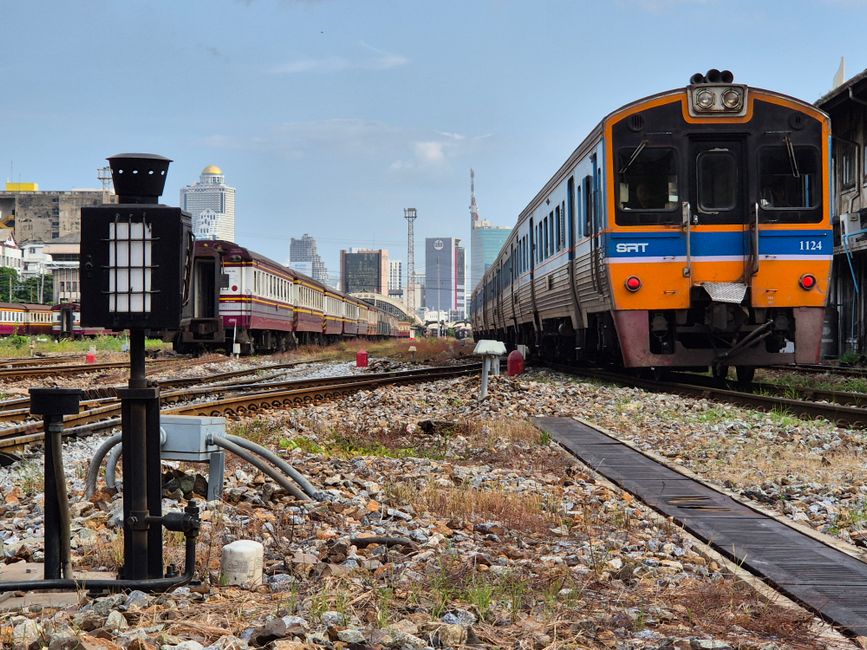
Thailand's State Railway of Thailand (SRT) has faced pressure for years to modernize its network, but funding constraints and bureaucratic delays have slowed progress. Advocates have repeatedly called for automatic barriers, better signage, and improved driver monitoring systems as baseline measures that could prevent tragedies like this one.
Calls for Accountability
In the aftermath of the crash, Thai officials and transport advocates have urged swift action. Investigators are expected to examine not only the driver's condition but also whether safety protocols at the crossing were functioning properly, including signals, barriers, and warning systems.
For the families of those killed and injured, the question of accountability will be paramount. Drug use behind the controls of a heavy freight train is not just a personal failing. It points to systemic gaps in how rail operators are screened, supervised, and held responsible for the lives in their hands.
As the investigation continues, Thai authorities have pledged a full and transparent inquiry into the cause of the collision.
Source: BBC World News

