Astronomers Are Trying to Film a Black Hole in Action
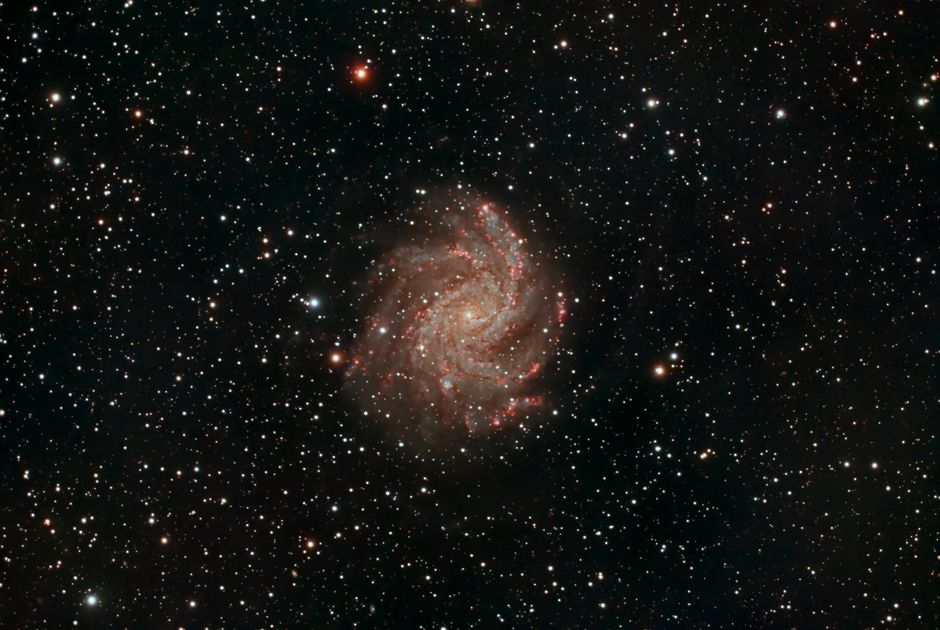
For the first time in history, astronomers are attempting to capture moving footage, a video, of a black hole. The target is the supermassive black hole at the heart of the Messier 87 galaxy, located approximately 50 million light-years from Earth and already famous as the subject of the first-ever black hole photograph, released in 2019.
Bob McDonald, host of CBC's Quirks and Quarks, broke down the ambitious project and what it could reveal about one of the universe's most extreme objects.
How You Film Something That Swallows Light
Black holes themselves are by definition invisible, nothing, including light, escapes their gravitational pull beyond the event horizon. What can be observed and imaged is the region immediately surrounding the black hole: the accretion disk of superheated gas and dust spiralling inward, and the black hole's shadow cast against that glowing background.
The technique used is Very Long Baseline Interferometry (VLBI), which links radio telescopes spread across the globe to create, in effect, a single telescope the size of the Earth. The Event Horizon Telescope collaboration achieved the first still image using this method; now they're working on capturing how the structure changes over time.
Why Video Changes Everything
A still image tells us the structure at a single moment. Video, even a very slow sequence of frames captured over months and years, will reveal how matter flows around the black hole, how jets of material are launched from the poles, and whether the structure changes in ways that match or challenge our theoretical models.
For black hole physics, this is roughly analogous to the difference between a snapshot of a storm and a time-lapse video of one forming.
The Science Value
Understanding black holes better isn't just intellectually satisfying. It's fundamental to understanding how galaxies form and evolve, since supermassive black holes appear to play a central role in regulating star formation in their host galaxies.
Source: CBC News / Quirks and Quarks