'The Rats Are Like a Storm'
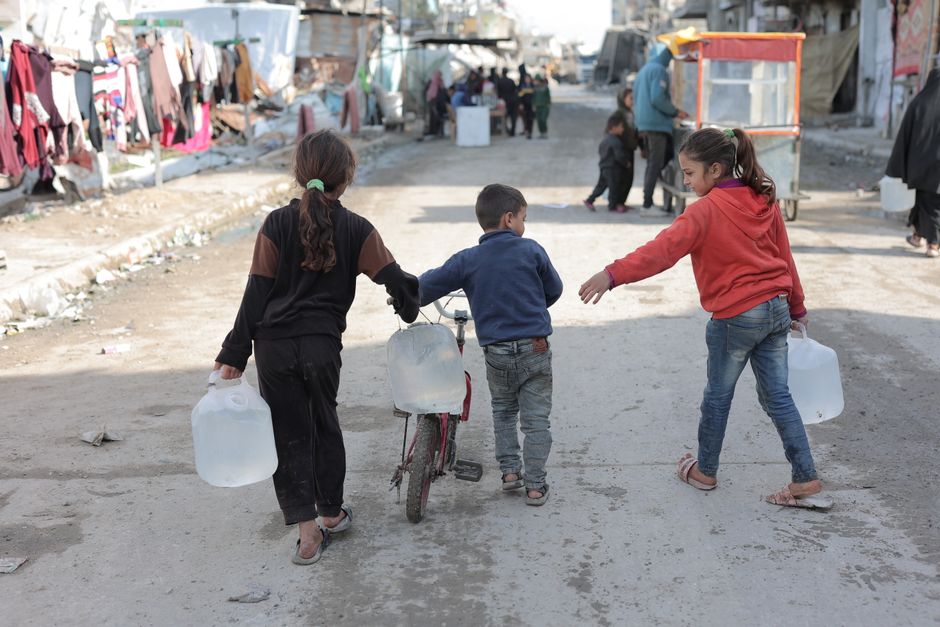
When people think about the humanitarian crisis in Gaza, they picture bombed-out buildings and overflowing displacement camps. But there's another layer of suffering playing out every night in the tents where Palestinian families are trying to survive, one that rarely makes the front page.
According to a report from CBC News, Palestinians sheltering in makeshift tents pitched among rubble across the Gaza Strip are being overrun by severe rodent infestations. The words of one displaced Palestinian say it plainly: "The rats are like a storm."
It's a phrase that captures something visceral, not one or two rodents, but relentless swarms descending in the dark, contaminating food, terrifying children, and putting vulnerable families at risk of serious illness.
A Public Health Emergency on Top of a Humanitarian One
Rodent infestations are a well-documented consequence of mass displacement. When populations are uprooted and sanitation infrastructure collapses, rat populations explode. In cramped, makeshift settlements, the public health risks multiply quickly, leptospirosis, rat-bite fever, salmonella, and other rodent-borne diseases that are treatable under normal conditions can become life-threatening without access to clean water, medicine, or functional health care.
For families already surviving with the bare minimum, a rat infestation isn't just a nuisance. It's a direct threat to life, particularly for young children, the elderly, and anyone with a compromised immune system.
Aid Groups Struggling to Cope
The organizations working to support Palestinians in Gaza are operating under extraordinary strain. Food, water, and medical supplies are chronically insufficient, and access to the region remains severely restricted. Against that backdrop, coordinated pest control is nearly impossible to implement at any meaningful scale.
Aid workers quoted in the CBC report say they're overwhelmed, not just by the scale of immediate physical needs, but by the cascading, compounding nature of the crisis. Each new layer of suffering stretches response capacity further.
Canadian humanitarian organizations have decades of experience operating in complex conflict zones where shelter crises intersect with disease outbreaks and food insecurity. The situation unfolding in Gaza is precisely the kind of multi-layered emergency that pushes even well-resourced aid operations to their limits.
Why Canadians Are Paying Attention
CBC News, Canada's public broadcaster, has continued to report on the human dimensions of the Gaza crisis, including stories like this one that don't always rise to the top of geopolitical coverage. These reports matter because they put a face on displacement, reminding Canadians that behind every statistic is a real family trying to protect their kids from something as fundamental and terrifying as a rodent infestation in the middle of the night.
Canada has been among the countries publicly calling for expanded humanitarian access to Gaza, acknowledging that the population's needs vastly outpace what is currently being met on the ground.
For Canadians watching from afar, stories like this are a reminder that the humanitarian emergency in Gaza is not a single crisis. It's dozens of crises stacked on top of each other, each one harder to solve than the last.
Source: CBC News, 'The rats are like a storm': Palestinians seeking refuge in rubble struggle with rodent infestations

