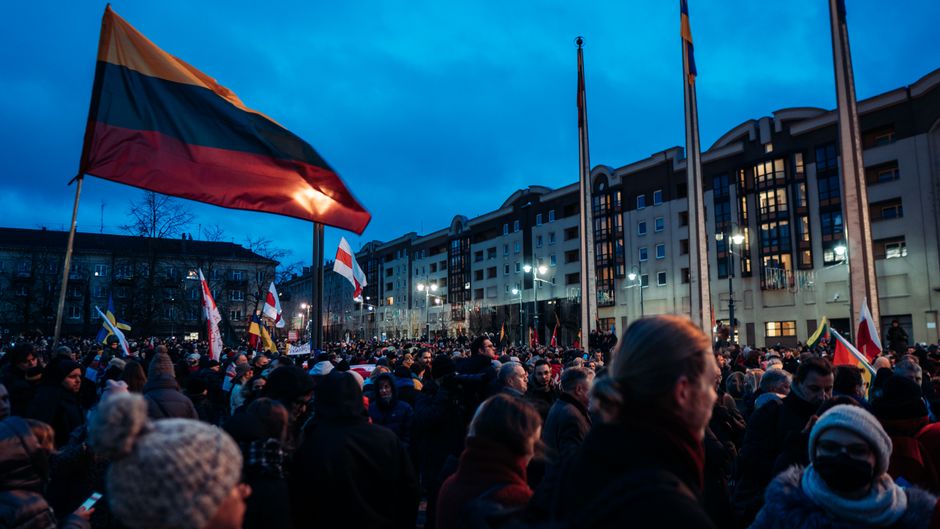
A Small Country With a Big Lesson
Canada is no stranger to trade turbulence. With tariff threats from Washington rattling supply chains and exports facing new headwinds, policymakers are scrambling for answers. They might want to look east, way east, to a country of just under three million people that already wrote the playbook on economic survival under pressure.
Lithuania, the Baltic state wedged between Russia, Belarus, and the Baltic Sea, spent years as a target of deliberate economic coercion from both Moscow and Beijing. Rather than capitulate, it adapted. Rapidly. And the results were striking.
How Lithuania Did It
The pressure campaign started in earnest after Lithuania allowed Taiwan to open a representative office under its own name in 2021, a symbolic but politically charged move that infuriated Beijing. China responded with an unofficial economic blockade, cutting off Lithuanian imports and pressuring multinational companies to sever ties with the country.
Moscow, meanwhile, had long used energy dependency as a geopolitical lever across the former Soviet sphere. Lithuania's response was methodical: it diversified its trade partners, invested heavily in domestic defence and technology sectors, and, most critically, severed its energy ties with Russia years before the rest of Europe was forced to confront the same reality.
Rather than shrinking under the pressure, Lithuania's economy grew. It leaned into its tech sector, attracted foreign investment, and positioned itself as a credible, predictable trade partner in a region full of instability.
Why This Matters for Canada
Canada's situation isn't identical, but the structural parallels are hard to ignore. For decades, Canada has been deeply intertwined with the U.S. economy, roughly 75 percent of Canadian exports head south of the border. That concentration has always been a vulnerability. Recent years have made it feel more like a liability.
Economists and trade policy experts have called for Canada to do exactly what Lithuania did: diversify aggressively, invest in sectors that reduce dependency on a single partner, and build trade relationships with allies in Europe, Asia, and the Global South. The rhetoric has been there for years. The urgency is now catching up.
Canada has natural advantages Lithuania didn't, vast natural resources, a highly educated workforce, established relationships with G7 partners, and a seat at major multilateral tables. The question isn't whether Canada can build resilience. It's whether there's the political will to move fast enough.
Defence, Tech, and Trade: The Three-Legged Stool
Lithuania's recovery wasn't built on any single policy. It combined increased defence spending (the country now exceeds NATO's two-percent GDP target), a deliberate push to grow its domestic tech ecosystem, and a systematic effort to sign new trade agreements and deepen relationships with like-minded democracies.
Canada is already making moves in some of these areas, defence spending commitments have increased, and there's renewed interest in deepening trade ties with the EU and Indo-Pacific partners. But the Lithuanian example suggests that speed and coordination matter as much as the individual policy choices.
The Bigger Picture
Economic coercion, using trade, investment, and market access as weapons, is no longer just a tool of authoritarian regimes targeting small neighbours. It has become a feature of great-power competition. Canada, like Lithuania before it, is learning that neutrality and dependency are not the same thing as safety.
Lithuania's story is ultimately one of a country that chose discomfort in the short term to build stability in the long run. That trade-off is now squarely on the table for Canada.
Source: CBC News, Lithuania's economic resilience and what Canada can learn

