What Is Amortization?
Your mortgage amortization period is the total length of time it would take to pay off your mortgage completely, assuming you make all scheduled payments. In Canada, the two most common options for insured mortgages (less than 20% down) are:
- 25 years (the traditional standard)
- 30 years (newly available to first-time buyers and new construction buyers since August 2024)
For uninsured mortgages (20%+ down), amortization can go up to 30 or even 35 years depending on the lender.
Note: Amortization is different from your term (usually 5 years), which is how long your current rate is locked in. You renew every 5 years, but the amortization clock keeps ticking.
The Monthly Payment Difference
Here's the concrete math for an Ottawa purchase:
Mortgage amount: $500,000 at 4.7% interest rate
| Amortization | Monthly Payment | Total Paid | Total Interest | |---|---|---|---| | 25 years | $2,823 | $846,900 | $346,900 | | 30 years | $2,581 | $929,160 | $429,160 |
Difference: $242 less per month with 30 years, but $82,260 more in total interest over the life of the mortgage.
That's a significant number. The monthly savings are real, but so is the long-term cost.
When 30 Years Makes Sense
For first-time Ottawa buyers at budget limits: If the difference between 25 and 30 years is what makes your GDS ratio work, and gets you into a home in a neighborhood you want, the extra interest cost may be worth it.
For cash-flow management: If you're early in your career, have student loans, or have variable income, the lower required payment gives you more breathing room each month. You can always make extra payments to pay down faster.
For investing the difference: Some people take the $242/month difference and invest it. At a 7% average return, $242/month over 30 years grows to roughly $274,000. Whether this outpaces the extra mortgage interest depends on the market, but it's a viable argument.
When 25 Years Makes More Sense
If you can afford it: The faster you pay down your mortgage, the more equity you build and the less interest you pay. If 25 years doesn't strain your budget, choose it.
Long-term thinking: $82,000 in extra interest is real money. If your income is stable and growing, 25 years is the financially conservative choice.
Retirement planning: If you're buying at 35–40, a 25-year amortization means your mortgage is paid off at 60–65, before or at retirement. A 30-year amortization pushes that to 65–70.
The Prepayment Hack
Here's the best of both worlds: Take the 30-year amortization for the lower required payment, but make the 25-year payment voluntarily.
Most Canadian mortgages allow you to make extra payments of 10–20% of the original principal per year without penalty. If you make the higher 25-year payment, you'll pay off your mortgage in 25 years and save the extra interest, but if a month gets tight, you can drop back to the lower required payment.
Check with your lender that your mortgage allows this flexibility before choosing this strategy.
Ottawa Context
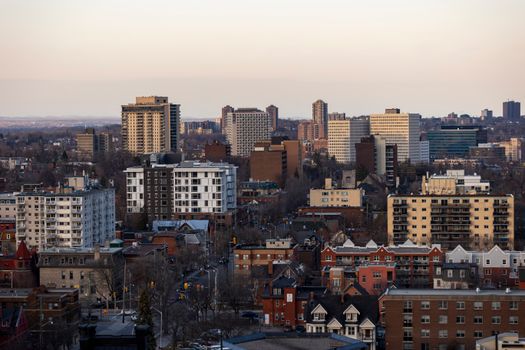
With Ottawa homes averaging $650,000+, and many first-time buyers pushing their budgets, the 30-year option has become more popular since it was expanded. Just go in with eyes open about the long-term cost, and a plan to make extra payments when your income allows.