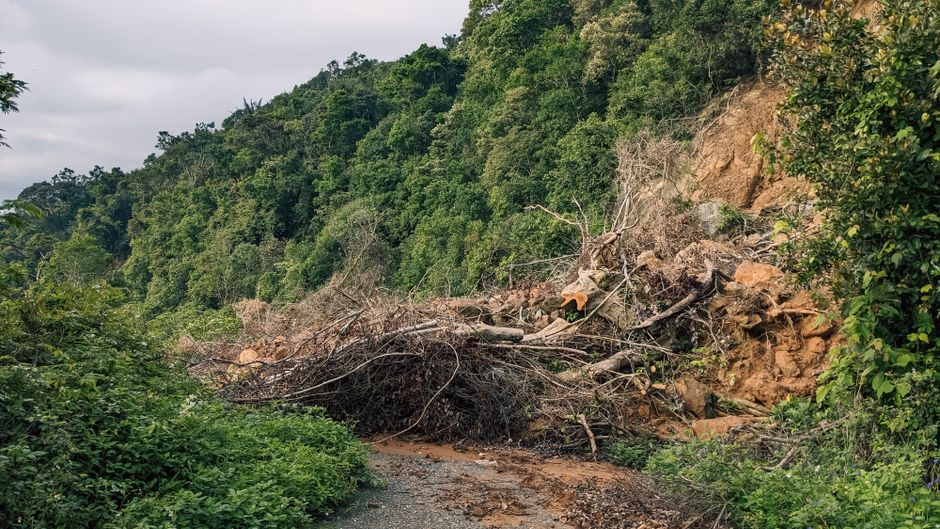
Isolated Again
For the third time in ten years, the roughly 150 residents of Old Fort, B.C., have woken up to find themselves cut off from the rest of the world.
A slow-moving landslide south of Fort St. John has once again severed road access to the small northern British Columbia community, leaving residents without the kind of reliable connection to neighbouring towns that most Canadians take for granted. No easy grocery run. No quick trip to the hospital. No normal.
A Pattern That's Hard to Ignore
What makes this crisis especially difficult for Old Fort residents isn't just the inconvenience. It's the feeling of déjà vu. This is the third landslide to isolate the community in a decade, and the repetition is taking a real toll on morale.
For a place where many families have deep roots, each event chips away at something harder to measure than road access: a sense of security, of belonging, of a future. Residents who spoke publicly after the latest slide didn't hide their frustration. Some are openly wondering whether staying is still the right call.
The question isn't just logistical anymore. It's existential.
Why Does This Keep Happening?
The geology south of Fort St. John has long been prone to instability. The region sits on terrain that becomes increasingly susceptible to movement during wet seasons, and with shifting precipitation patterns in northern B.C., the risk isn't shrinking.
Slow-moving landslides, the kind that don't come crashing down overnight but rather creep forward over days and weeks, are particularly disruptive because they're hard to predict with precision and even harder to stop. Mitigation efforts can slow the timeline, but they rarely eliminate the threat entirely in geologically active zones.
For Old Fort, which sits in exactly such a zone, that reality has now played out three times over.
What Happens to a Community After This?
The bigger concern raised by locals isn't just getting the road reopened. It's what happens afterward. Emergency access can be restored. Temporary solutions can be found. But the long-term question of whether infrastructure investment in Old Fort is sustainable, and whether provincial authorities will commit to permanent solutions, remains unanswered.
Small rural communities across northern B.C. face similar dilemmas. When the cost of maintaining safe access climbs and the population base stays small, hard conversations start to happen at the government level, conversations that don't always end well for the people who call those places home.
Residents are pushing back against any suggestion that relocation is the answer. Old Fort has been home to families for generations, and for many, leaving isn't simply a practical decision. It's a cultural and personal one.
What Comes Next
Authorities are assessing the current slide's movement and working on restoring access, but no firm timeline has been given. Emergency services are monitoring the situation, and supplies can be flown in if the isolation extends significantly.
For now, the people of Old Fort are doing what rural Canadians in tight-knit communities have always done, looking out for each other and waiting for the ground to stop moving.
Source: CBC News, British Columbia

