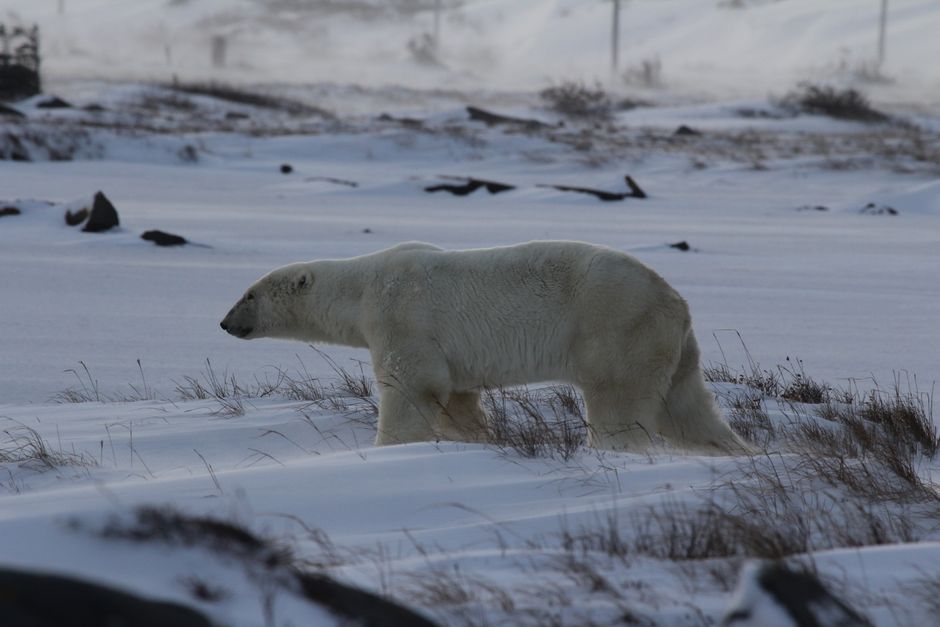
Eat or Be Eaten: Hudson Bay's Survival Balancing Act
Canada's Hudson Bay is home to one of the most iconic predator-prey dynamics in the natural world, the relationship between ringed seals and polar bears. And according to a new study, that relationship is far more important to conservation planning than previously recognized.
Researchers have been taking a closer look at how ringed seals and polar bears interact across the bay's vast, shifting ecosystem. Their central finding: when it comes to establishing marine protected areas (MPAs) in the region, the predator-prey link between these two species cannot be ignored.
Why the Predator-Prey Relationship Matters
Ringed seals are the primary prey of polar bears in the Hudson Bay region. On the surface, that might seem like a straightforward ecological fact, but the implications for conservation are significant.
Marine protected areas are typically designed to shield specific species or habitats from human interference. But if a protected zone is drawn around ringed seal habitat without accounting for polar bear behaviour and movement, it risks disrupting a food web that both species depend on for survival.
The researchers behind the new study argue that effective MPA design needs to consider the full ecological picture, including where polar bears hunt, where seals congregate, and how those patterns shift with the seasons and with climate change.
A Region Under Pressure
Hudson Bay is no stranger to environmental stress. Warming temperatures have dramatically reduced sea ice coverage in the region, which affects both species in cascading ways. Polar bears rely on sea ice as a hunting platform to access seals. As ice seasons shorten, bears have less time to build up the fat reserves they need to survive the ice-free summer months.
Ringed seals, meanwhile, use snow drifts on sea ice to build birth lairs, protected spaces where pups are born and nursed. With less stable ice and shallower snow, pup survival rates can fall.
The new study adds another layer to this already complex picture: protecting one species in isolation may not be enough if the broader ecological relationship is not factored into conservation strategy.
The Path Forward for Marine Protection
Canada has made significant commitments in recent years to expand marine and coastal protection. The federal government has pledged to protect 30 percent of Canada's oceans by 2030, an ambitious target that will require careful science-based planning.
Studies like this one offer a reminder that conservation is rarely simple. Drawing lines on a map only works if those lines reflect the realities of how animals actually live, move, and depend on one another.
For Hudson Bay, getting that balance right could be critical, not just for ringed seals and polar bears, but for the broader Arctic ecosystem that so many species, and Indigenous communities, rely on.
Source: CBC News, To eat or be eaten? The dilemma facing ringed seals in Hudson Bay

