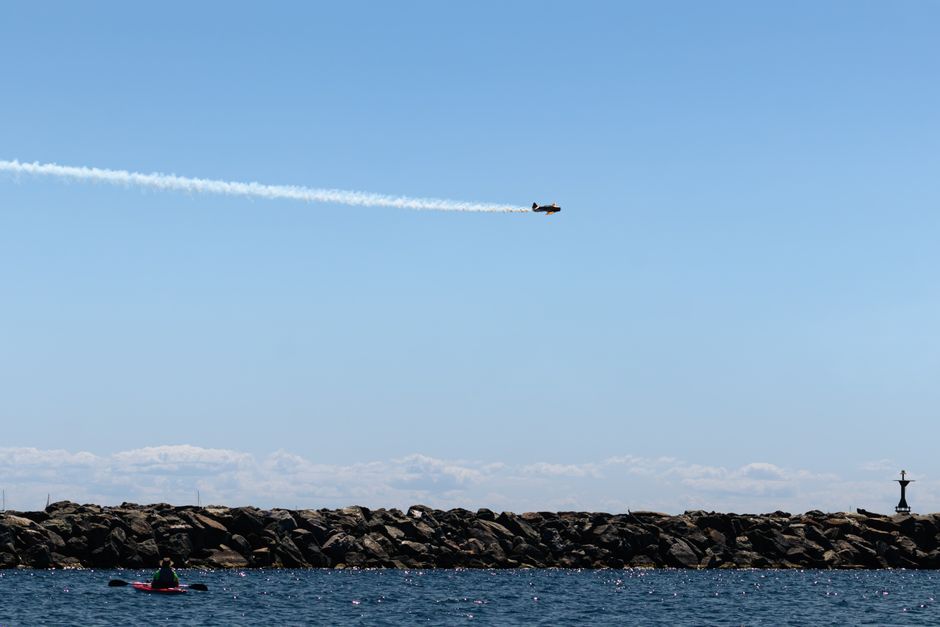
A Community Under a Cloud
For many Toronto residents, the roar of jet engines overhead isn't just a noise problem: it's a health one. According to a new CBC report, people living near busy flight corridors say they're already dealing with elevated levels of ultrafine particles from aircraft exhaust, and they're not happy about what could be coming next.
Ultrafine particles, tiny airborne pollutants released by jet fuel combustion, are small enough to penetrate deep into the lungs and even enter the bloodstream. Unlike larger particulate matter, they're difficult to filter and can linger in the air long after a plane has passed overhead. Residents say the cumulative effect of living under busy flight paths has become impossible to ignore.
Ford's Bigger-Jets Push
Into this already tense situation steps Premier Doug Ford, who has been vocal about his desire to expand aviation capacity in the Toronto area, including bringing in larger aircraft. For residents already struggling with what they describe as too much exhaust, the prospect of heavier, louder jets making more frequent passes is alarming.
Critics argue that scaling up flight operations without first addressing existing air quality concerns is putting economic ambition ahead of public health. Advocates for affected communities say they weren't consulted and that provincial decision-makers are dismissing the lived experience of thousands of Torontonians.
What the Science Says
Research into ultrafine particle exposure near airports has grown in recent years, with studies linking prolonged exposure to increased risks of respiratory illness, cardiovascular disease, and developmental issues in children. Health advocates say that while individual flights may produce relatively small amounts of these particles, the cumulative impact of hundreds of daily takeoffs and landings in densely populated areas deserves serious regulatory attention.
Canada currently lacks specific national standards for ultrafine particle concentrations, a gap that researchers and environmental groups have long called on federal and provincial governments to address.
A National Conversation
Toronto's situation is far from unique. Communities near major airports across Canada, and around the world, are pushing back against aviation expansion as climate awareness and health concerns grow. The tension between economic development, air travel demand, and the well-being of nearby residents is becoming one of the defining urban policy debates of the decade.
For now, Toronto residents say they'll keep fighting to be heard, and keep watching the skies with growing frustration.
Source: CBC Top Stories. Read the original report at cbc.ca.

