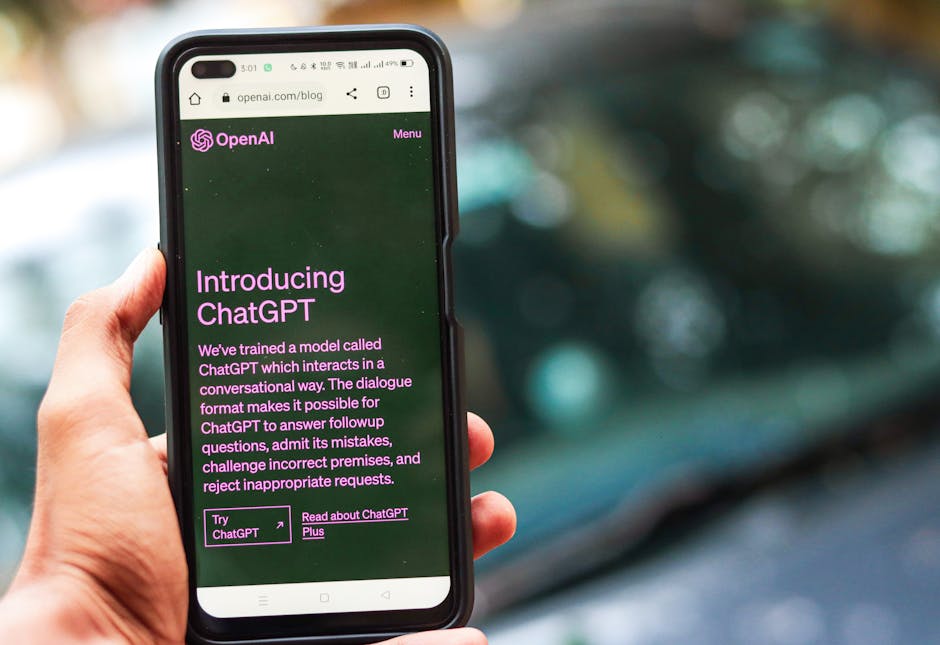
ChatGPT Is Coming for Your Wallet
OpenAI has officially stepped into the personal finance arena, rolling out a new feature that allows ChatGPT users to link their bank accounts and investment portfolios directly to the AI assistant.
Once connected, users are greeted with a comprehensive dashboard that breaks down their financial life in one place, portfolio performance, day-to-day spending patterns, active subscriptions, and bills coming due. It's the kind of bird's-eye financial view that previously required juggling multiple apps like Mint, YNAB, or your bank's own interface.
How It Works
The feature uses third-party financial data aggregators, the same type of plumbing that powers apps like Plaid, to securely pull in account data. Users grant read-only access, meaning ChatGPT can see your balances and transactions but cannot move money.
From there, the AI layer is where things get interesting. Rather than just displaying numbers, ChatGPT can answer natural language questions about your finances: "Am I spending more on food delivery than last month?" or "When is my next insurance payment due?" The assistant can surface trends, flag unusual charges, and help users think through budget decisions in plain conversational English.
A Crowded But Lucrative Space
OpenAI is entering a market that's already seen significant activity. Intuit's Mint shut down in early 2024 after struggling to monetize its large user base, while newer entrants like Copilot and Monarch Money have been gaining traction among users who want smarter money tools.
What OpenAI brings to the table is scale and conversational depth. With hundreds of millions of ChatGPT users worldwide, the distribution advantage is enormous, and the ability to have a genuine back-and-forth about your finances, rather than just reading a chart, is a meaningful differentiator.
That said, questions around data privacy and trust are significant. Handing an AI company access to your banking data is a much more sensitive proposition than asking it to write an email. OpenAI has emphasized that financial data is not used to train its models, but consumer advocates are likely to scrutinize those claims closely.
What It Means for Canadian Users
As of launch, the feature is rolling out to users in the United States, with international availability, including Canada, expected to follow in the coming months. Canadian users will also face the added complexity of open banking regulations, which are still being finalized under federal legislation.
For now, Canadians interested in AI-powered personal finance tools have a handful of domestic options, including some credit union and bank apps that have begun integrating AI-assisted budgeting features.
The Bigger Picture
This launch signals OpenAI's ambition to move beyond productivity and creative tools into high-stakes, deeply personal domains. Personal finance is intimate territory, and if the company can earn user trust here, it positions ChatGPT as an everyday utility rather than an occasional novelty.
Whether users are ready to let an AI into their bank accounts in a meaningful way remains the real question. The technology is clearly ready. The trust part is still a work in progress.
Source: TechCrunch