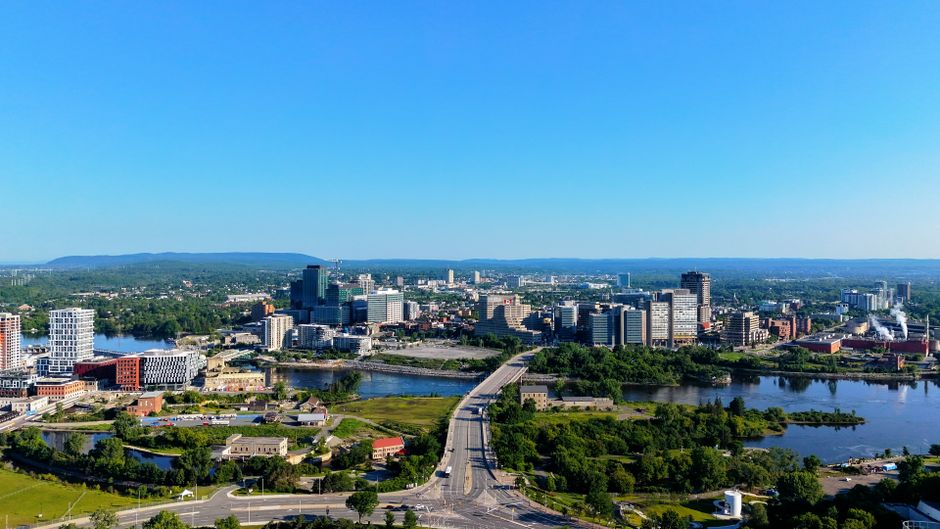
Ottawa turns 200 this year, and while the city is planning its share of birthday festivities, historians and geologists are using the milestone to point out something wilder: this stretch of the Ottawa Valley has a story that stretches back roughly 10,000 years, long before Bytown was ever surveyed.
That story is written in bone. Fossilized remains of beluga whales, found in clay deposits around the region, are proof that the land beneath Ottawa's streets was once the floor of an ancient sea. After the last ice age, melting glaciers left behind the Champlain Sea, a massive inland body of saltwater that covered much of the St. Lawrence and Ottawa valleys. Beluga whales swam where Parliament Hill now stands, along with seals and other marine life adapted to cold northern waters.
What the bones tell us
These beluga fossils aren't just novelties for a museum case. They help scientists piece together how the region's geology, waterways, and even soil composition took shape over thousands of years. The heavy clay soil found throughout Ottawa and the surrounding valley, the same clay that has shaped everything from local farming to construction, is a direct leftover of that ancient seabed.
It's a reminder that the Ottawa River and Rideau Canal, so central to the city's identity today, sit within a much older and stranger geological history. Long before fur traders, lumber barons, or civil servants arrived, this was a marine environment teeming with Arctic-adapted wildlife.
Why this matters for Ottawa's bicentennial
As the city leans into its 200th anniversary programming this year, with events, exhibits, and community celebrations planned across the capital, local historians say it's worth zooming out. Ottawa's official founding in the 1820s is a relatively recent chapter in a much longer regional timeline. The beluga whale bones offer a tangible, almost startling way to connect residents to that deeper history.
Museums and heritage groups in the capital have periodically featured these fossils in exhibits exploring the region's natural history, and interest tends to spike whenever the topic resurfaces. For a city built on a river, there's something fitting about being reminded that the water here once ran a lot deeper, and a lot saltier, than anyone walking along the Ottawa River Pathway today might guess.
So as Ottawa blows out 200 candles, it's worth remembering: the land itself has been marking anniversaries for a lot longer than that.
Source: Ottawa Citizen