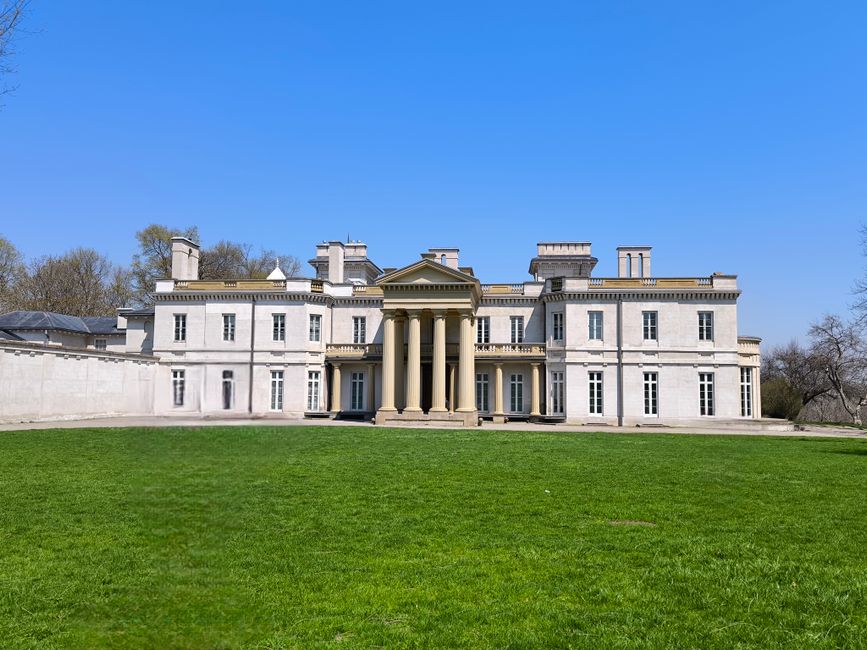
Ottawa is home to some of Canada's most storied landmarks, but few carry the symbolic weight of 24 Sussex Drive, and few have been allowed to fall into such disrepair.
For more than a decade, the official residence of Canada's prime minister has sat empty, slowly deteriorating behind its iron gates on the banks of the Ottawa River. What should stand as one of our most recognizable national symbols has instead become something closer to an international embarrassment, a crumbling historic mansion that no sitting prime minister has actually lived in since Stephen Harper vacated it in 2015.
A Residence in Decline
The problems at 24 Sussex are well-documented and long-standing. The National Capital Commission (NCC), which manages the property, has warned for years that the building is in dire need of structural repairs. Outdated electrical systems, asbestos, lead paint, deteriorating windows, the list of deficiencies is extensive. Estimates for a full restoration have ranged from $36 million to well over $100 million, depending on scope.
Rather than commit to a restoration plan, successive governments have quietly kicked the can down the road, wary of the optics of spending heavily on a prime ministerial mansion. The result: a heritage property that continues to decay on the public dime regardless, just without anyone actually living in it.
More Than Just a House
What often gets lost in debates about cost and political optics is what 24 Sussex actually represents. Built in 1868, the limestone mansion perched above the Ottawa River has hosted world leaders, heads of state, and defining moments in Canadian political history. It is woven into the fabric of Ottawa's heritage landscape in a way that few other buildings are.
Allowing it to continue deteriorating isn't a neutral choice. It's an active decision to let a piece of Canadian history crumble. And for Ottawa residents who live and work near Rockcliffe and the surrounding heritage neighbourhoods, the slow decline of such a prominent landmark carries real local significance.
The Case for Restoration
Advocates for restoring 24 Sussex argue that the debate has been unnecessarily politicized. No one expects a prime minister to champion spending on their own potential residence, the optics are simply too fraught. But that political awkwardness shouldn't be allowed to determine the fate of a 150-year-old heritage building.
The NCC and the federal government have a responsibility to manage national heritage properties with long-term thinking. Deferred maintenance doesn't make problems go away. It makes them more expensive. Every year 24 Sussex sits empty and unrepaired, the eventual restoration bill grows larger.
There's also a broader cultural argument: countries take care of their important buildings. Whether it's the White House, Downing Street, or the Élysée Palace, official residences are maintained as symbols of institutional continuity and national pride. Canada deserves no less.
What Comes Next
The NCC has been directed in the past to develop options for the property, ranging from full restoration to conversion to another public use. Whatever path is chosen, Ottawa and the rest of Canada deserve a clear, committed decision, not another decade of drift.
24 Sussex Drive is part of Ottawa's heritage and Canada's story. It's time to treat it that way.
Source: Ottawa Life Magazine

