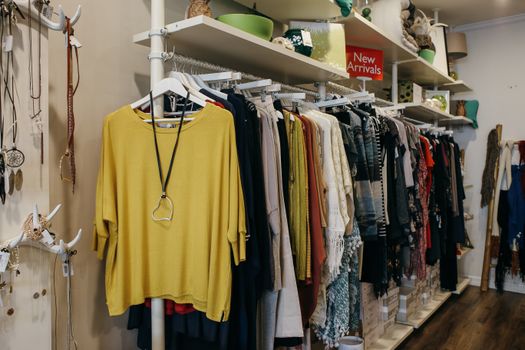
Ottawa residents scrolling through TikTok or Pinterest have likely noticed that fashion no longer comes in just 'casual' or 'formal'. It comes in 'old money,' 'clean girl,' 'goblincore,' and hundreds of other hyper-specific aesthetic labels that seem to multiply by the week.
What Even Is an Aesthetic Label?
Aesthetic labels are shorthand identifiers for a cohesive visual style, usually built around clothing, colour palettes, home décor, and even music taste. Think 'cottagecore' (flowy linen, wildflowers, a deep love of bread baking) or 'dark academia' (tweed blazers, candlelight, and a well-worn copy of Dostoevsky). They exploded in popularity during the pandemic, when people were stuck at home, deep in algorithm rabbit holes, and desperately searching for identity anchors.
The Comfort of a Label
For many people, especially younger ones figuring out who they are, aesthetic labels offer something genuinely valuable: a sense of belonging and a starting point for self-expression. Instead of staring blankly at a rack of clothes, you have a framework. You know what speaks to you. Ottawa's local thrift scene on Bank Street or in Hintonburg becomes a treasure hunt rather than an overwhelming chore when you know you're hunting for 'vintage preppy' rather than just. stuff.
Labels also build community. Ottawa's creative quarters, Centretown, the Glebe, Westboro, are full of people who find their people through shared aesthetics. A shared visual language can be the first handshake before a real friendship.
When Labels Start to Confine
But there's a flip side. Once you've claimed an aesthetic, the pressure to perform it consistently can feel quietly exhausting. Social media amplifies this: post something 'off-brand' and the comments notice. Suddenly your self-expression has an audience with opinions.
There's also the consumerism trap. Aesthetic labels are, frankly, good for business. Fast fashion brands and algorithm-driven retailers love them because they make it easy to sell you a complete 'look.' The 'coastal grandmother' trend didn't just inspire mood boards. It sold linen trousers by the truckload. What starts as self-discovery can quietly become a shopping list.
Finding Balance
The healthiest approach is probably to treat aesthetic labels the way Ottawans treat the Rideau Canal in summer, enjoy what it offers, but don't let it define the whole season. Use them as inspiration rather than instruction. Mix the 'dark academia' cardigan with the sneakers that feel like you. Let your wardrobe be a conversation, not a costume.
Style, at its best, is fluid. Ottawa's fashion-forward crowd has always known how to layer, literally and figuratively, pulling from different influences to create something that's genuinely their own. Aesthetic labels can be a useful map, but you don't have to stay on the marked trail.
The Takeaway
Aesthetic labels are neither inherently good nor bad. They're a tool. Wield them with a light hand: let them inspire, but don't let them run the show. The most compelling personal style has always been the one that evolves, surprises, and refuses to be fully categorized.
Source: Her Campus via Google News Ottawa Style feed.