Ottawa Families Are Watching America's AI Education Push
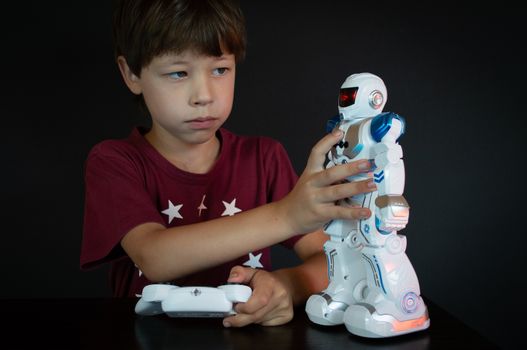
Ottawa parents, educators, and tech workers are keeping a close eye on a bold new vision coming out of Washington, one where artificial intelligence and robots become primary teachers for children learning at home.
U.S. First Lady Melania Trump has made AI-powered education a signature cause, publicly championing a future where robotics and machine learning play a prominent role in homeschooling across America. While her vision is squarely aimed at the U.S. education system, the implications ripple northward, especially in a city like Ottawa, home to a growing tech sector and a community of parents who are already experimenting with ed-tech tools.
What Melania Is Actually Proposing
The First Lady hasn't released a formal policy platform, but her public statements make the direction clear: she sees AI tutors and robotic learning companions as legitimate, even preferable, alternatives to traditional classroom instruction for some families. The pitch is personalization. AI can theoretically adapt to a child's learning pace, identify gaps in real time, and deliver content in the style that works best for each individual student.
It's not a fringe idea. Companies across Silicon Valley and beyond have spent billions developing adaptive learning platforms, AI tutors, and educational robotics kits. Tools like Khan Academy's Khanmigo (powered by GPT-4) are already being used by thousands of homeschooling families.
Ottawa's Ed-Tech Scene Is Already There
Here in Ottawa, the conversation isn't hypothetical. The capital has a quietly robust ed-tech community, with startups and researchers at Carleton University and uOttawa actively working on AI-assisted learning tools. Local homeschooling networks, which grew significantly during and after the pandemic, have been early adopters of platforms like Duolingo, IXL, and AI writing coaches.
For many Ottawa families who pulled their kids from the school system in 2020 and never looked back, AI tools are already part of the daily routine. The question isn't whether to use them. It's how much to lean on them.
The Pushback: What Critics Are Saying
Not everyone is sold. Education researchers and child development experts raise valid concerns about screen dependency, social isolation, and the limits of what an algorithm can actually teach. A robot can drill multiplication tables, but can it notice when a child is anxious, bored, or struggling emotionally?
Ottawa teachers and school board representatives have been vocal in similar debates locally, particularly around AI in classrooms. The concern isn't the technology itself, but over-reliance on it as a substitute for human connection and mentorship.
The Bigger Picture for Canadian Families
Canada has its own relationship with ed-tech and homeschooling regulation. Ontario requires registered homeschoolers but gives families wide latitude in curriculum. That freedom means Ottawa parents can already incorporate as much, or as little. AI as they choose.
Whether Melania Trump's robot-teacher vision becomes U.S. policy or stays a talking point, it's accelerating a conversation that Ottawa's education community will need to have: how do we harness AI as a powerful tool without losing the irreplaceable human elements of teaching?
For now, the robots are a supplement. But the future Melania is describing? It might be closer than we think.
Source: TechCrunch