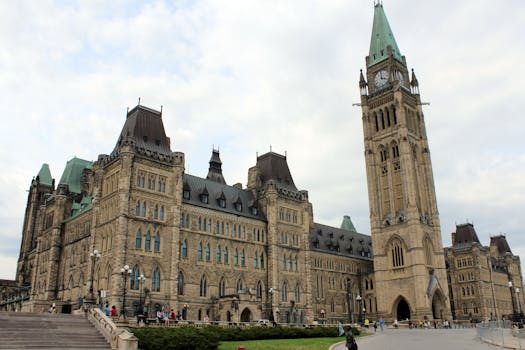
Ottawa finds itself at odds with two of Canada's most powerful provinces this week, as federal lawyers squared off against Ontario and Alberta at the Supreme Court of Canada over Quebec's controversial religious symbols law, and the broader question of how far the notwithstanding clause can go.
What's at Stake
Bill 21, Quebec's secularism law passed in 2019, bans public sector workers in positions of authority, including teachers, judges, and police officers, from wearing religious symbols on the job. The law has been a flashpoint ever since, with critics arguing it disproportionately targets Muslim women who wear the hijab, as well as Sikhs, Jews, and other religious minorities.
To shield the law from Charter challenges, Quebec invoked Section 33 of the Constitution, the notwithstanding clause, which allows provinces to temporarily override certain fundamental rights. The clause has been at the centre of fierce constitutional debate ever since.
Federal Government Pushes Back
The federal government has taken a firm stance at the hearings, arguing that the notwithstanding clause cannot be used as a blanket shield to protect legislation that discriminates against Canadians based on religion. Ottawa's legal team contended that allowing such broad use of Section 33 would fundamentally undermine the Canadian Charter of Rights and Freedoms.
For many Ottawans watching the proceedings, the case cuts to the heart of what it means to be Canadian, balancing provincial autonomy with the guarantee of individual rights that the Charter is meant to provide.
Ontario and Alberta Side with Quebec
In a notable alignment, both Ontario and Alberta intervened on the side of Quebec, defending the provinces' right to use the notwithstanding clause broadly and without interference from the courts. Their argument: the clause is a legitimate democratic tool that lets elected legislatures have the final say over rights questions, not unelected judges.
The position put two of Canada's most populous English-speaking provinces directly at odds with the federal government, a tension that reflects growing friction between Ottawa and several provincial capitals over constitutional authority.
Why It Matters Beyond Quebec
While Bill 21 is a Quebec law, the outcome of this hearing will reverberate across the country. A ruling that limits how the notwithstanding clause can be used could constrain future provincial legislation in Ontario, Alberta, and beyond. Conversely, a broad endorsement of Section 33 could open the door for other provinces to use it more aggressively to override Charter protections.
For Ottawa residents, many of whom work in the federal public service or have family across the country, the case is a reminder of how constitutional battles fought in courtrooms can shape everyday life, from what a teacher can wear in a classroom to what rights Canadians can count on, regardless of which province they call home.
The Supreme Court's decision, expected later this year, is widely anticipated to be one of the most significant constitutional rulings in a generation.
Source: The Globe and Mail via Google News Ottawa

