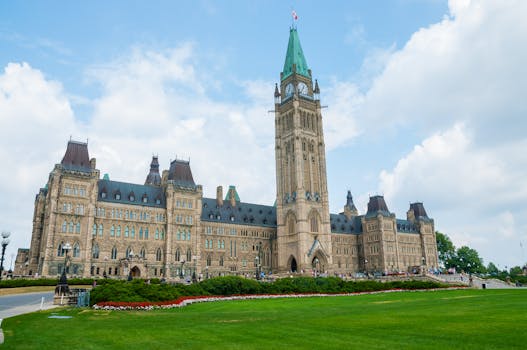
Ottawa is at the centre of a national constitutional debate this week as the Supreme Court of Canada hears legal challenges to Quebec's Bill 21, the provincial secularism law that bans public servants in positions of authority from wearing religious symbols at work.
The federal government, representing Ottawa's position, has joined a growing chorus of voices arguing that provinces should not have unchecked power to invoke the notwithstanding clause, the constitutional provision that allows legislatures to override certain Charter rights for a renewable five-year period.
What Is Bill 21?
Quebec's Act Respecting the Laicity of the State, better known as Bill 21, was passed in 2019. It prohibits teachers, police officers, judges, and other public authority figures from wearing religious symbols, such as hijabs, turbans, kippot, or crosses, while on the job. The law has been fiercely criticized by civil liberties groups and religious communities as discriminatory, while Quebec's government and many residents defend it as a legitimate expression of the province's secular identity.
Quebec invoked the notwithstanding clause when passing the law, shielding it from Charter challenges under sections 2 and 15, which protect freedom of religion and equality rights respectively.
A National Divide at the Supreme Court
Legal arguments at the Supreme Court this week have made one thing crystal clear: Canada is deeply divided on how much latitude provinces should have when using the notwithstanding clause.
Several provinces, including Alberta and Saskatchewan, have intervened in support of Quebec's position, arguing that the notwithstanding clause is a legitimate and democratically accountable tool that legislatures should be free to use without judicial second-guessing.
On the other side, the federal government and provinces like Ontario and British Columbia have argued that while the clause is a valid part of the Constitution, its use should come with meaningful limits, particularly when it comes to overriding fundamental rights like religious freedom and equality.
The Ottawa perspective is significant: the federal government's intervention signals that this isn't just a Quebec issue. It's a question about the kind of country Canada wants to be, and what role the courts should play in protecting minority rights against majority will.
Why This Matters for Ottawa Residents
For Ottawa's diverse and multicultural population, the outcome of this case hits close to home. The capital is home to large Muslim, Sikh, Jewish, and other religious communities, many of whom have family members or colleagues who could be directly affected if similar legislation were ever considered federally or in other provinces.
The case also raises deeper questions about federalism and the balance of power between Ottawa and the provinces, questions that have defined Canadian constitutional law since Confederation.
The Supreme Court's eventual ruling, which is not expected for months, could reshape how the notwithstanding clause is used across the country for generations to come.
Legal scholars are watching closely. Whatever the court decides, it will almost certainly set a precedent that reverberates well beyond Quebec's borders.
Source: CBC Ottawa via RSS

