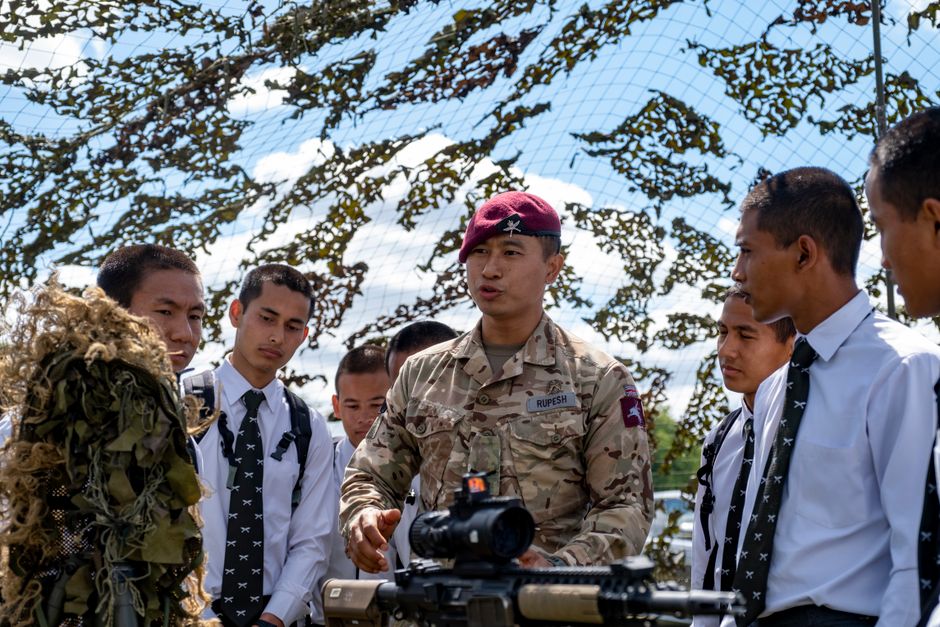
Ottawa has long been at the heart of Canada's defence establishment, but a deepening recruitment shortfall is putting real strain on the institution the capital depends on most.
The Canadian Armed Forces is authorized for 71,500 Regular Force members and 30,000 Primary Reservists, and today, it is thousands below both of those targets. According to a new report from Ottawa Life Magazine, the problem isn't a lack of willing Canadians. It's a recruiting system that can't turn interest into uniforms.
A City with Military in Its DNA
Ottawa isn't just Canada's political capital. It's one of the most militarized cities in the country. National Defence headquarters at the Carling Campus in Nepean employs thousands of civilian and uniformed staff. CFB Ottawa and surrounding installations across the National Capital Region are woven into the fabric of the city's economy and culture. For many Ottawa families, military service is a generational calling.
That makes the current shortfall especially visible here. At recruiting centres across the city, the story is consistently the same: applicants who expressed interest months or years ago, still waiting to hear back.
Where the Pipeline Breaks
The process involves multiple stages, aptitude testing, medical evaluations, security clearances, and final enrolment, and candidates can drop off at any one of them. The security and medical clearance stage alone can stretch beyond a year. In today's tight labour market, where tech firms, the federal public service, and private contractors are all competing for the same ambitious young Canadians, an 18-month wait for a job offer is a non-starter.
The system was designed for an era when the military had far more leverage over career decisions. That era is over.
A Digital Mismatch
There's also a generational gap in how the process works. Younger applicants expect fast, digital-first experiences, quick responses, clear timelines, online intake. The CAF's recruiting infrastructure still leans heavily on in-person appointments, physical paperwork, and phone follow-ups that frequently go unanswered. The disconnect between what applicants expect and what the bureaucracy delivers is pushing away exactly the motivated, tech-literate recruits the modern military needs most.
Pilot modernization programs have been launched, but defence observers say the changes have been incremental, not transformational.
What Reform Looks Like
Veterans' groups and defence policy advocates, including several based here in Ottawa, have pushed for end-to-end digitization of the intake process, mandatory stage-by-stage timelines, and a fast-track enrolment stream for high-demand trades like cybersecurity, engineering, and intelligence.
With NATO allies increasing pressure on Canada to hit the 2% GDP defence spending target, the urgency is real. Spending more on equipment means nothing if there aren't enough people to operate it.
Ottawa, with its bilingual, educated, and public-service-oriented population, is one of the strongest potential recruiting markets in the country. The problem isn't the candidates. It's a system that keeps making them wait.
Source: Ottawa Life Magazine

