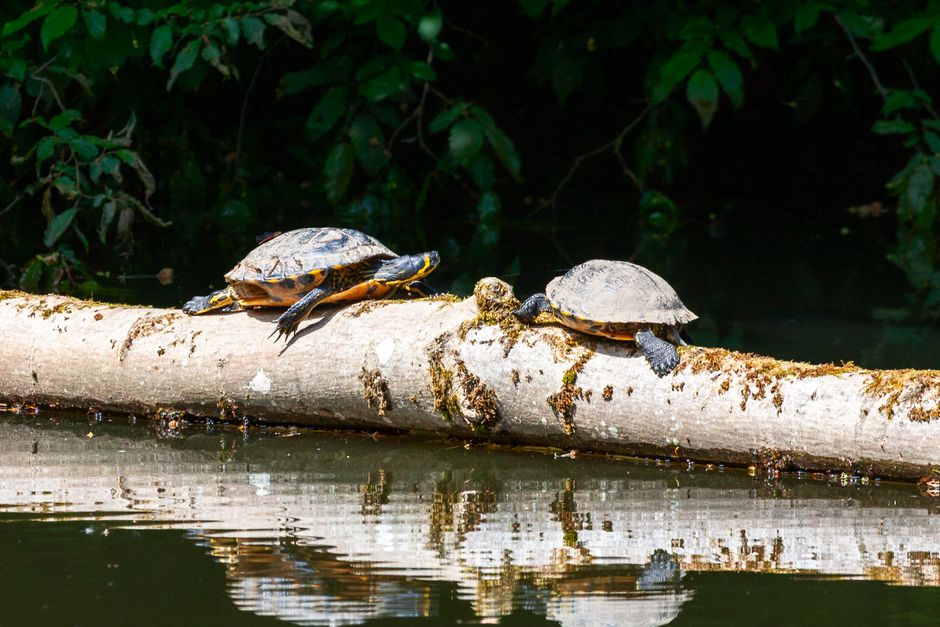
Every spring and summer, Ottawa's rivers get a very dedicated visitor, and he's not there to fish.
Grégory Bulté, a biology professor at Carleton University, has spent years hauling himself into local waterways to count Northern Map Turtles one by one. It's painstaking, unglamorous field work, but Bulté says it's exactly the kind of data that science desperately needs.
Counting What Others Overlook
Northern Map Turtles are a native freshwater species found across much of eastern Canada, including the rivers and lakes in and around Ottawa. They're not endangered, but they're not especially well-studied either, which is precisely why Bulté has made them his focus.
Each year, he and his team wade into the water, scanning for turtles basking on logs, submerged near the riverbank, or moving through the shallows. Every animal they spot gets logged: its size, sex, location, and whether it's been seen before. Over time, that data builds into something rare in wildlife science, a long-running, consistent population record.
"You need years of data to understand what's actually happening with a population," Bulté has explained. A single snapshot tells you very little. Trends, on the other hand, tell you whether a species is thriving, holding steady, or quietly slipping.
Why Map Turtles?
Northern Map Turtles are what biologists call a "long-lived" species. They can survive for decades, which means their populations respond slowly to environmental pressures. That makes them both resilient and vulnerable: a bad stretch of years (pollution spikes, habitat loss, road mortality) might not show up in the numbers until it's already too late to reverse.
By tracking individual animals year after year, Bulté can detect subtle shifts before they become crises. His work helps answer fundamental questions: Are turtles returning to the same nesting areas? Are juvenile survival rates holding up? Are Ottawa's river ecosystems healthy enough to support stable populations?
Field Work Up Close
CBC Ottawa's Stu Mills joined Bulté for this year's count, getting a firsthand look at what the research actually involves. Spoiler: it's a lot of standing in cold water, squinting at logs, and moving very slowly so you don't spook anything.
But there's something quietly compelling about the work. Each turtle encountered is a data point in a story that stretches back years, and will continue long after any single field season ends.
Ottawa's Rivers as Living Labs
For Ottawa residents, Bulté's research is a reminder that the Ottawa River and its tributaries aren't just scenic backdrops. They're functioning ecosystems that support a web of native wildlife, from herons and beavers to the Northern Map Turtles navigating their underwater world just below the surface.
Carleton University's location on the Rideau River gives Bulté and his students direct access to prime turtle habitat, making Ottawa something of a natural laboratory for this kind of long-term ecological monitoring.
If you've ever spotted a turtle sunning itself on a log along the Rideau or the Ottawa River, there's a decent chance it's one Bulté has counted before.
Source: CBC Ottawa. Original report by Stu Mills.

