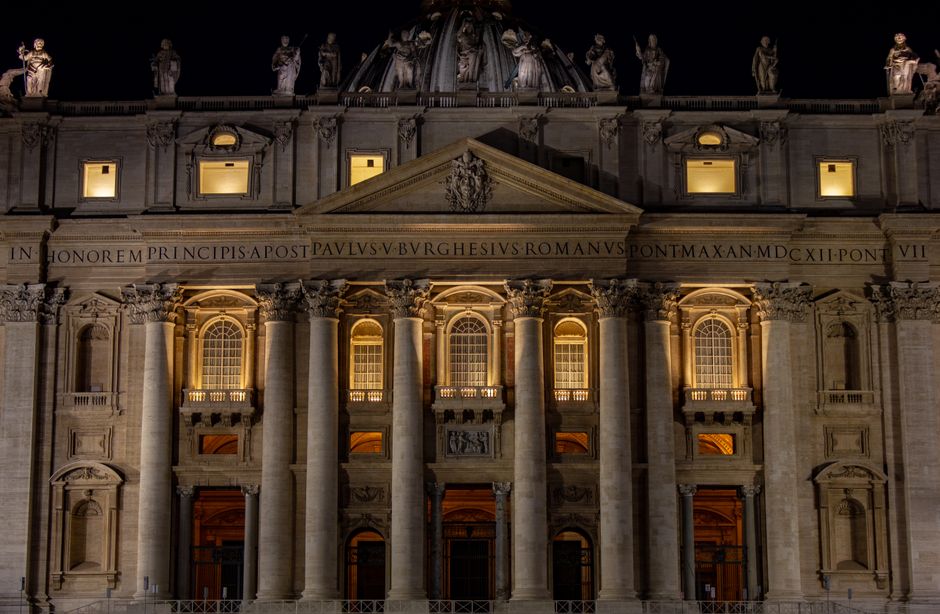
Ottawa's Tech World Watches as a Canadian AI Pioneer Seeks Spiritual Counsel
Ottawa's thriving technology community, home to Kanata North, one of Canada's largest tech hubs, is paying close attention as Christopher Olah, a Canadian AI pioneer and co-founder of Anthropic, made an extraordinary journey to the Vatican to seek guidance from one of the world's oldest moral authorities on one of humanity's newest and most pressing challenges: artificial intelligence.
Olah, one of the foundational minds behind Anthropic, the AI safety company responsible for building Claude, isn't the first person you'd expect to find seeking counsel from Rome. Yet the move speaks volumes about where the AI industry finds itself right now: powerful, fast-moving, and increasingly uncertain about its own moral compass.
A Pope for the Machine Age
The backdrop for Olah's visit is Pope Leo XIV's first papal encyclical, Magnifica Humanitas, a document being compared in scope to one of the most consequential writings in modern Church history. Leo XIII's Rerum Novarum, published in 1891 at the height of the industrial revolution, tackled the brutal realities of factory labour, worker exploitation, and the moral obligations of capital. It reshaped how the Catholic Church engaged with social and economic justice for generations.
Now, as Dr. Sean Tobin writes in Ottawa Life Magazine, Leo XIV's encyclical attempts to do something similar for the age of artificial intelligence, to offer a spiritual and ethical framework at a moment when the creators of the machine are themselves asking where the guardrails should be.
Why an AI Founder Is Listening
For Olah, the visit isn't a PR stunt. He's long been one of the more thoughtful voices in the AI world, someone who has dedicated much of his career to interpretability, the science of understanding what's actually happening inside AI systems. If anyone building these tools is genuinely wrestling with questions of human dignity, transparency, and accountability, it's him.
The Church, for its part, has been surprisingly engaged on tech ethics. The Vatican's participation in international AI governance conversations has grown steadily, and Magnifica Humanitas is seen as a continuation of that engagement, grounding the debate in centuries of reflection on human nature, free will, and moral responsibility.
Why This Matters to Canadians
Canada has positioned itself as a global leader in AI research, with world-renowned institutions like the Vector Institute in Toronto and Mila in Montreal. Canadian AI talent, including Olah himself, has been instrumental in shaping how the technology has developed globally.
But leadership comes with responsibility. As these tools grow more capable and more pervasive, conversations about governance, ethics, and who bears moral accountability are no longer abstract. They are urgent.
The image of a Canadian AI co-founder sitting across from a pope, asking an ancient spiritual authority to help guide what comes next, is both strange and strangely fitting. The industrial revolution had its encyclical. Perhaps the AI revolution will too.
Source: Ottawa Life Magazine, article by Dr. Sean Tobin

