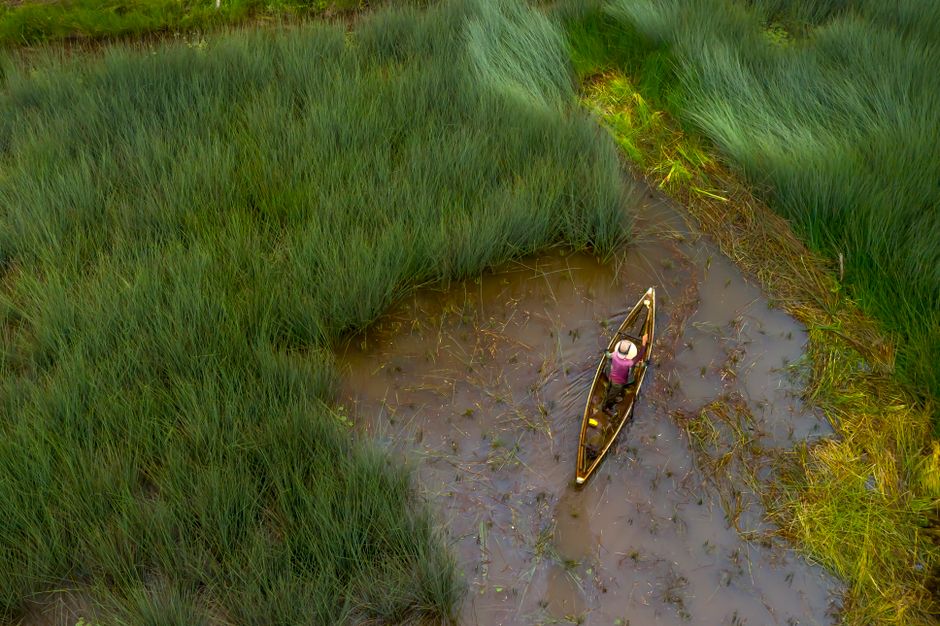
A Farmer's Vision for Conservation
In the Ottawa region, a quiet but meaningful effort to protect Canada's natural landscape is taking shape, not in a government office, but on a farm in Winchester, Ontario. An eastern Ontario farmer has taken it upon herself to build a wetland conservation area on her own property, and she hopes the project will inspire others to do the same.
The initiative comes as Canada works toward ambitious targets for protecting biodiversity and natural spaces. Under the Kunming-Montreal Global Biodiversity Framework, Canada has committed to protecting 30 percent of its land and water by 2030, a target that scientists and conservationists say cannot be met by governments alone. Private landowners, especially farmers, will need to step up.
What the Project Looks Like
The wetland the farmer helped construct is designed to restore natural water filtration, provide wildlife habitat, and support native plant species, all functions that wetlands perform when left intact. Across Canada, wetlands have been drained and filled over decades of agricultural and urban development, leaving ecosystems fragmented and wildlife populations under pressure.
For this Winchester-area farmer, the decision to dedicate part of her land to conservation wasn't just about hitting a national target. It was about seeing the land recover. Wetlands attract birds, amphibians, and insects that support healthy soil and water cycles, benefits that ripple outward to neighbouring farms and communities.
The Bigger Picture for Eastern Ontario
Eastern Ontario, including the areas surrounding Ottawa, contains a patchwork of farmland, forests, and waterways. The region's proximity to the Ottawa River and Lake Ontario watersheds makes wetland protection especially significant, healthy wetlands filter runoff, reduce flooding, and store carbon.
Conservation groups have long pointed out that farmers are some of the most important partners in protecting nature, because so much of Canada's ecologically sensitive land is privately owned. Programs that offer incentives or technical support for projects like this one are seen as critical to meeting national conservation goals.
A Model for Others?
The farmer hopes her project will demonstrate that conservation and agriculture don't have to be in conflict. By showing what a working farm wetland looks like, and what it can do for local wildlife and water quality. She hopes to encourage neighbouring landowners to explore similar projects.
For advocates watching Canada's progress toward its 2030 nature targets, stories like this one matter. Every restored wetland is one more piece of a larger mosaic of protected habitat, and Eastern Ontario's agricultural communities could play a significant role in building that mosaic.
With political will, financial support, and more farmers willing to put conservation first, projects like the Winchester wetland could become less of an exception and more of a standard across the region.
Source: CBC Ottawa (cbc.ca/news/canada/ottawa)

