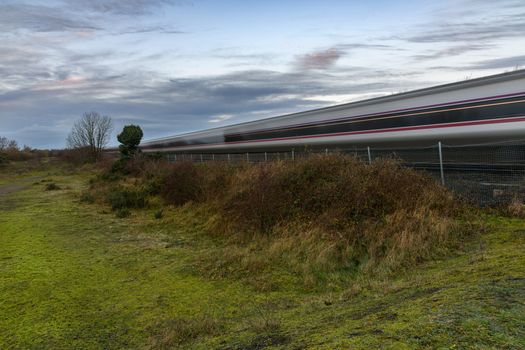
Ottawa and the surrounding region are no strangers to big infrastructure promises, but the latest one, a high-speed rail line stretching from Quebec City to Toronto, is hitting close to home for farmers in eastern Ontario who worry their land, and their futures, could be caught in the crosshairs.
What Is the Alto Rail Project?
Alto is the company behind the ambitious plan to connect Canada's two largest provinces with a high-speed rail corridor. The route would pass through eastern Ontario, cutting through some of the country's most productive agricultural land. While details are still being refined, the project has already sparked anxiety among farming families who have worked the same land for generations.
The company has pledged what it calls a "no-surprise environment", a commitment to communicate openly with landowners as the corridor is mapped out. But for many farmers, reassurances from a corporation with big plans and a long timeline don't go very far when their fields and barns sit squarely in the path of potential development.
Farmers Fear for Their Future
The concern isn't just about compensation. Farming families worry about severance, the splitting of a property by a rail line, which can make land nearly impossible to farm efficiently. Even if a landowner receives fair market value for expropriated land, the disruption to drainage systems, field boundaries, and equipment access can cripple an operation.
For eastern Ontario producers who already face thin margins, rising input costs, and climate uncertainty, the prospect of rail construction cutting through their properties adds another layer of stress to an already difficult livelihood.
Many farmers say they've received little concrete information about where exactly the corridor will run. Until they see maps with their lot lines on them, it's nearly impossible to plan: whether that means deciding to invest in new equipment, expand operations, or consider selling.
The Ottawa Region's Agricultural Identity
The land east of Ottawa is a patchwork of dairy farms, cash crop operations, and market gardens that supply food to the National Capital Region and beyond. Rural municipalities like Russell, Nation, and South Stormont have deep agricultural roots, and local leaders are closely watching how Alto navigates conversations with their constituents.
For Ottawa residents, this matters beyond the farm gate. Local food security, rural community health, and the character of the region east of the city are all tied to the viability of these farming operations.
What Comes Next?
Alto says it is in the early stages of corridor refinement and will be engaging with communities along the route. The company's pledge to avoid surprises will be tested in the months ahead as more specific route information becomes available.
Farmers and rural advocates are urging the company, and governments at all levels, to treat agricultural land as a strategic asset, not just a line item in a cost-benefit analysis. They want early, meaningful consultation, not a notification letter after the corridor has already been decided.
High-speed rail has the potential to transform travel between Ottawa, Toronto, and Quebec City. But for the people whose fields may one day have a train running through them, the stakes couldn't be more personal.
Source: CBC Ottawa

