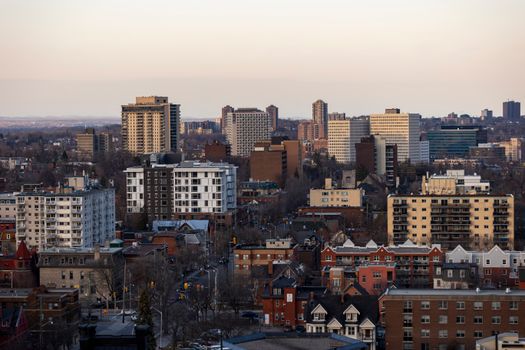
Ottawa's Real Estate Market Faces Its Federal Moment
Ottawa has long worn its status as a government town as both a badge of honour and a financial safety net. Stable federal jobs meant stable mortgage payments, which meant a housing market that rarely swung as wildly as Toronto or Vancouver. But with the federal government signalling significant workforce reductions, through attrition, program cuts, and a broader push to trim the public service. That long-standing cushion is looking a little thinner.
The question now isn't whether federal downsizing will affect Ottawa real estate. It's how much, for how long, and who gets hit hardest.
The Risk Side of the Ledger
Historically, roughly one in four Ottawa residents works directly or indirectly for the federal government. That concentration has always been a double-edged sword, great for stability, vulnerable to policy shifts in a way that no other Canadian city quite is.
When federal employment contracts, the ripple effects tend to hit specific neighbourhoods harder than others. Areas like Centretown, Westboro, and the Glebe, where condo and townhouse inventory skews toward young professionals and dual-income government couples, could see softer demand if buyouts, early retirements, or layoffs accelerate through 2025 and into 2026.
Rental vacancies are another pressure point. Ottawa's rental market tightened considerably post-pandemic, but if a meaningful number of federal workers relocate or downsize, landlords in transit-adjacent buildings could feel it first.
Why the Pessimists Might Be Jumping the Gun
Here's the countervailing case: Ottawa's housing market has quietly diversified over the past decade.
Kanata North has grown into one of Canada's largest tech hubs, with over 500 companies employing tens of thousands of workers with no direct federal payroll connection. Biotech, defence contractors, and a growing startup ecosystem have added layers of economic activity that didn't exist in meaningful numbers twenty years ago.
Postal code data also suggests that in-migration to Ottawa from Toronto and Montreal, driven by affordability, hasn't stopped. Buyers priced out of larger markets are still looking at Ottawa as a relative deal, federal headcount notwithstanding.
And while downsizing headlines grab attention, not every reduction means fewer people in the city. Many federal workers who leave the public service stay in Ottawa, pivoting to consulting, contractor roles, or private-sector positions that feed off the same government ecosystem.
What the Numbers Are Telling Us Right Now
Average home prices in Ottawa have plateaued compared to their 2022 peak, but they haven't collapsed. The market is correcting, not cratering, a distinction that matters enormously for anyone deciding whether to list, buy, or wait.
Condos in the $400K–$550K range are sitting longer before selling. Detached homes in the $700K–$900K range in established neighbourhoods like Barrhaven and Orleans remain competitive, particularly with growing families who aren't tied to downtown government offices.
The Bottom Line for Ottawa Buyers and Sellers
If you're a federal worker eyeing a purchase, the calculus has genuinely changed. It's worth honestly assessing your job security before stretching on a mortgage. If you're a seller, patience and accurate pricing are your best friends right now. And if you're an investor, the long thesis on Ottawa hasn't fundamentally broken, but the easy money assumptions of the 2010s are firmly in the past.
Ottawa real estate has survived interest rate shocks, recession scares, and past rounds of government belt-tightening. The city's combination of diversifying employment, university anchors, and persistent demand from out-of-province buyers gives it more shock absorbers than the federal-town narrative suggests.
Risk is real. So is resilience.
Source: Ottawa Business Journal, The federal downsizing effect: Risk, resilience and Ottawa real estate