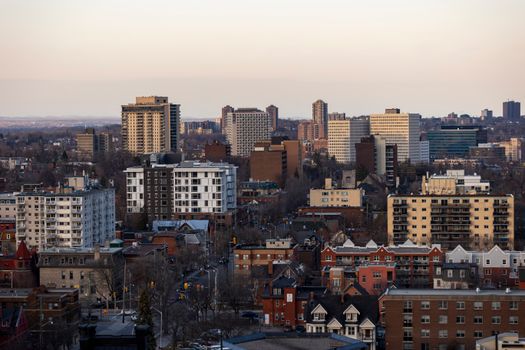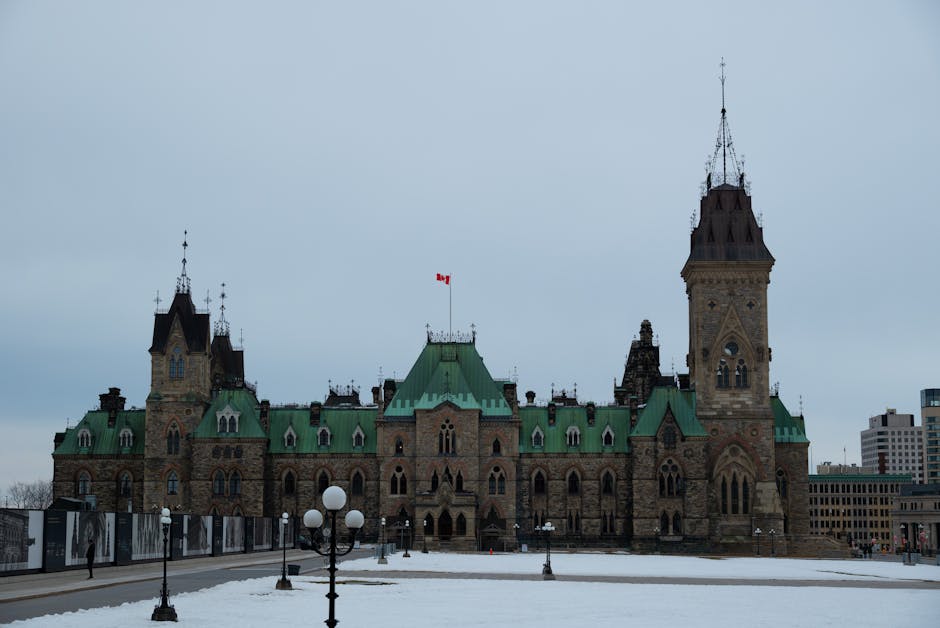
Ottawa's real estate market is unlike any other in Canada, defined in large part by the concentration of federal government employment that anchors the local economy. Understanding how federal employment shapes buying patterns, prices, and market stability is essential context for anyone purchasing property in the National Capital Region.
The Federal Employment Base
Approximately 135,000 federal public servants work in the National Capital Region, making the federal government by far the largest employer in Ottawa. Add in federal agencies, Crown corporations, and contractors, and the Ottawa economy has an unusually deep cushion against the private-sector volatility that affects cities like Calgary or Toronto. This stability has historically suppressed Ottawa's price volatility, the market doesn't spike as dramatically, but it also doesn't crash as hard.
Return-to-Office and 2026 Market Impact
The federal government's mandated return to office, requiring most public servants to be in the office at least three days per week, reversed the pandemic-era exodus from Ottawa's urban core. Demand for properties near downtown, LRT stations, and government campus areas in Tunney's Pasture, Confederation Heights, and the East Memorial Building zone rebounded through 2025. Neighbourhoods like Wellington West, Centretown, and Hintonburg have benefited from this re-urbanization.
How Government Salaries Map to Ottawa Real Estate
Federal salaries follow the Treasury Board classification system, which is publicly available. An EC-06 economist earns roughly $100,000 to $120,000. An AS-05 administrative officer earns $80,000 to $95,000. Dual-income government households, extremely common in Ottawa, routinely have combined household incomes of $180,000 to $250,000, which supports the $600,000 to $900,000 price range that defines much of Ottawa's active market.
Government Pension Security and Mortgage Qualification
Federal public servants with defined benefit pension plans (PSSA) have a significant qualification advantage. While lenders don't directly capitalize pension income for currently employed borrowers, the implied job security and income stability allows some lenders to be more flexible on debt service ratios. Mortgage brokers experienced in federal client bases understand this.
Areas Favoured by Government Buyers
Ottawa's east end (Avalon, Queenswood Heights, Orleans) historically attracted government workers seeking value. The west end (Kanata, Bells Corners, Stittsville) has grown as a tech-and-government hybrid suburb. Barrhaven remains popular with families prioritizing school quality and space. Near-downtown neighbourhoods have gained ground since return-to-office mandates took hold.
The Risk: Federal Policy Uncertainty
The 2025 federal workforce reduction announcements, affecting thousands of positions through attrition and targeted cuts, introduced a degree of uncertainty into Ottawa's market that hadn't been present for a generation. While the cuts were less severe than initially announced and concentrated in back-office roles, the psychological impact on buyer confidence was measurable in transaction volumes through mid-2025.
Long-Term Outlook
Ottawa's fundamental relationship between government employment and real estate is structural and enduring. Changes in government priorities shift demand around the edges but don't alter the core dynamic: a city with large, stable, well-compensated institutional employment is a structurally sound real estate market.