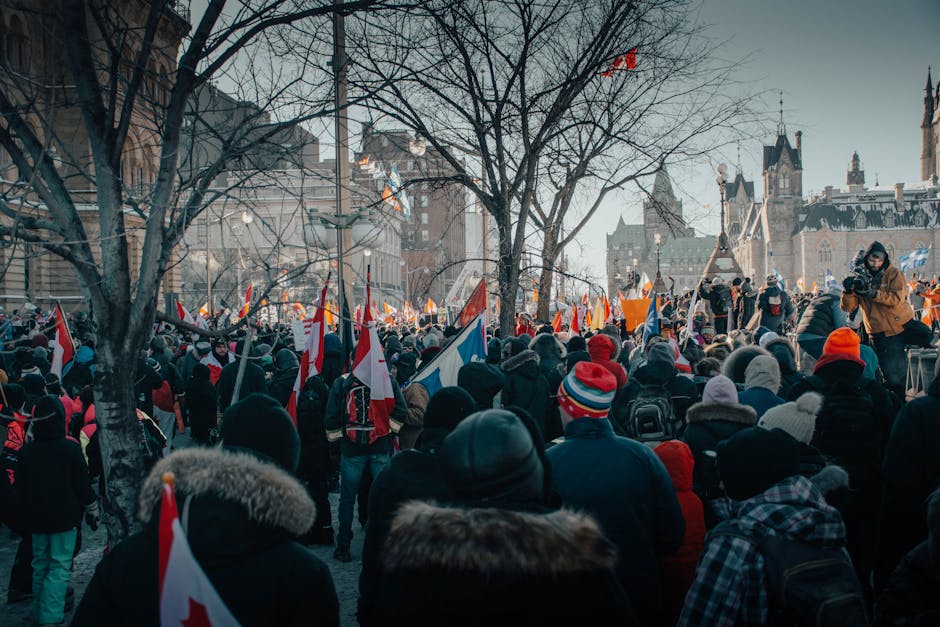
Longhouse Takes a Stand in Ottawa
Ottawa was at the centre of renewed Indigenous political action this week as the Longhouse, the traditional governance body of the Haudenosaunee Confederacy, gathered to discuss and respond to the protest surrounding Alto and its implications for Indigenous communities.
The Eastern Door, a Mohawk community newspaper based out of Kahnawake, reported on the meeting, highlighting that the issue had risen to the level of formal deliberation within traditional governance structures. That's significant: when the Longhouse convenes on a specific issue, it signals that the matter carries weight beyond individual advocacy and is being addressed through the Haudenosaunee's own sovereign decision-making processes.
What Is the Longhouse?
For those unfamiliar, the Longhouse is not just a building. It is the living embodiment of Haudenosaunee law, tradition, and self-governance. Rooted in the Great Law of Peace, the Longhouse system predates Canadian confederation by centuries and remains a functioning political and spiritual institution for many Haudenosaunee people today.
When the Longhouse speaks on a political issue, it carries authority that many in the community regard as more legitimate than elected band council structures, which were imposed under the Indian Act. This distinction matters when interpreting the weight of their response to the Ottawa protest.
The Ottawa Angle
The fact that Ottawa served as the site of the protest underscores a recurring dynamic in Canadian politics: when Indigenous communities seek to be heard at a national level, they often must bring their message to the capital. Ottawa has hosted countless such demonstrations, from Idle No More marches to pipeline opposition rallies to housing and treaty rights demonstrations.
By converging on Ottawa, protesters place their issue directly in the sight lines of federal decision-makers, and the Longhouse's formal engagement with that action adds an important layer of legitimacy and traditional authority to the movement.
Why It Matters Locally
For Ottawa residents, these moments are reminders that the land the city occupies sits within the traditional territory of the Algonquin Anishinaabe people, and that broader Indigenous political movements, including those of the Haudenosaunee, frequently intersect with the capital.
Engaging with and understanding these actions isn't just a matter of national news; it's part of the fabric of life in Ottawa, a city where reconciliation remains an active, evolving conversation rather than a completed project.
More details on the Longhouse's specific resolutions and the scope of the Alto protest are expected as coverage from The Eastern Door continues.
Source: The Eastern Door via Google News Ottawa.

