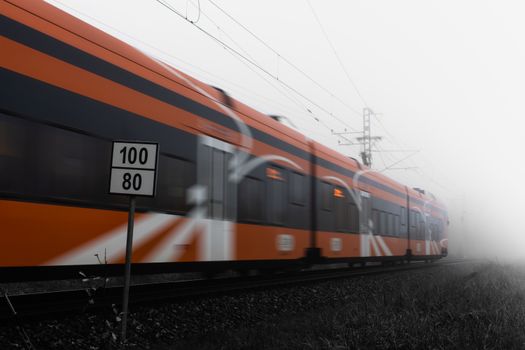
Ottawa residents and rural communities across Ontario and Quebec are raising alarm bells over the federal government's proposed high-speed rail (HSR) line connecting Toronto and Quebec City, a mega-project that would cut through some of the country's most productive farmland.
What's Being Proposed
The high-speed rail corridor, long discussed as a transformative piece of Canadian infrastructure, would link Toronto, Ottawa, Montreal, and Quebec City with trains capable of speeds over 300 km/h. Proponents argue it would slash travel times, reduce highway congestion, and cut carbon emissions from car and air travel along the busy corridor.
But after months of public consultations, it's becoming clear that support isn't universal, especially outside city limits.
Farmers Fear Expropriation
In rural Ontario and Quebec, the conversation has taken a sharp turn. Farmers are voicing serious concerns about what the project could mean for their livelihoods. The central fear: expropriation. Under Canadian law, the federal government can seize private land for major infrastructure projects, compensating owners at market value, but many farmers say no amount of money can replace land that's been in their families for generations.
Others are worried about a different scenario entirely: their farms not being taken outright, but being bisected. A high-speed rail line requires fencing for safety, meaning a field sliced in two could become nearly impossible to farm efficiently. Equipment can't cross. Animals can't roam. Water drainage and irrigation patterns get disrupted.
"You can't just draw a line through someone's livelihood on a map and call it progress," said one Ontario farmer during a recent consultation session.
The Ottawa Region Connection
For Ottawa, the stakes are significant. The capital sits squarely on the proposed corridor, and the surrounding rural municipalities, including parts of Lanark County, the Ottawa Valley, and communities east toward the Quebec border, are home to active farming operations that could fall directly in the project's path.
Regional politicians have been urged by constituents to demand greater transparency about land assessments and route planning before any final decisions are made. Ottawa's position as the midpoint of the corridor also makes it a logistical hub for the project, potentially bringing economic benefit to the city core while imposing costs on surrounding rural areas.
Balancing Infrastructure and Community
The tension here isn't new. Large infrastructure projects in Canada, pipelines, highways, transmission lines, have long faced resistance from landowners caught in their path. High-speed rail is no different, and advocates for affected farmers argue that consultation processes often feel like rubber-stamp exercises rather than genuine dialogue.
Environmental groups, meanwhile, are split. Some support HSR as a critical climate tool. Others have raised concerns about habitat fragmentation and the ecological impact of a continuous fenced corridor running hundreds of kilometres through mixed farmland and wetland.
What Happens Next
The federal government has not yet announced a final route, and engineering assessments are ongoing. Advocates on both sides are urging Ottawa decision-makers to prioritize transparency, fair compensation frameworks, and genuine community input before shovels go anywhere near the ground.
For now, the pushback from rural communities serves as a reminder that even the most ambitious green infrastructure projects come with real trade-offs, and that the people living along the route deserve more than a consultation pamphlet.
Source: CBC Ottawa

