Ottawa's housing market got a major shot of optimism in 2025, with new housing starts climbing a remarkable 38% compared to the year prior, according to figures reported by CTV News. The surge marks one of the strongest years for new construction the capital has seen in recent memory, and for anyone watching Ottawa's tight housing market, it's a headline worth paying attention to.
What's Driving the Construction Boom?
A 38% jump in housing starts doesn't happen by accident. Several factors have been converging in Ottawa to push developers off the sidelines and back onto job sites.
Falling interest rates through 2024 and into 2025 made project financing more attractive, lowering the cost of borrowing for builders. At the same time, Ottawa's population has continued to grow steadily, fuelled by federal public service hiring, immigration, and spillover from an increasingly unaffordable Toronto market, keeping demand for new units high.
City Hall has also been under pressure to approve more development, particularly infill projects and higher-density housing along transit corridors. Zoning reforms and a push to fast-track certain permits appear to be translating into actual shovels in the ground.
What's Actually Being Built?
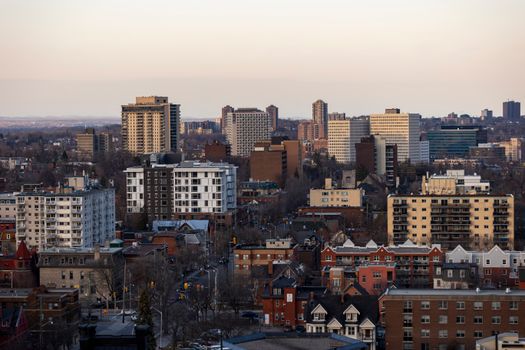
Housing starts capture everything from single-family detached homes to high-rise condos and purpose-built rental towers. Ottawa's recent growth has leaned heavily on multi-unit residential, apartment buildings, stacked townhomes, and mid-rise condos, rather than the sprawling single-detached subdivisions that defined Ottawa's post-war growth.
Neighbourhoods like Westboro, Hintonburg, Centretown, and Vanier have seen a steady parade of infill projects, while the suburbs of Barrhaven, Kanata, and Orleans continue to absorb demand for ground-level family housing.
Good News for Renters and Buyers, Eventually
More supply is, in theory, good news for affordability. Ottawa's rental vacancy rate has hovered uncomfortably low for years, putting upward pressure on rents. A significant wave of new units coming to market could help loosen things up, though housing economists are quick to note that new supply typically takes 18 to 36 months from start to occupancy before it actually hits the market.
For prospective buyers who have been sitting on the fence, the pipeline of new homes is encouraging. More options tend to cool bidding wars and give buyers more negotiating room, particularly at the higher end of the condo market.
The Bigger Picture
Ottawa isn't alone in posting stronger construction numbers: Canada's federal housing targets have created political pressure on municipalities coast to coast to get serious about supply. But a 38% single-year increase is notable even in that context, and positions Ottawa as one of the country's more active construction markets heading into 2026.
The challenge now is ensuring that the momentum continues, that infrastructure, transit, schools, water and sewer, keeps pace with new development, and that a meaningful portion of new units remain accessible to middle-income Ottawans rather than catering exclusively to the luxury end.
For a city that spent years wringing its hands over an affordability crisis, a construction boom is a welcome, if overdue, development.
Source: CTV News Ottawa via Google News