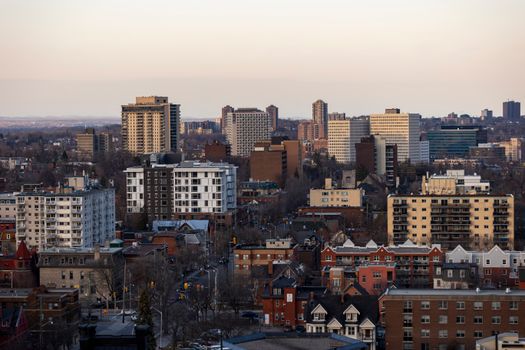
Ottawa's investment property market in 2026 continues to attract buyers looking for steady, long-term returns in a city backed by a large, stable public-sector employment base. While flashier markets like Toronto have seen sharper swings, Ottawa tends to reward patient investors with predictable cash flow and solid appreciation over time.
What Are Cap Rates Looking Like in Ottawa?
Capitalization rates, the ratio of net operating income to purchase price, have shifted meaningfully over the past couple of years as interest rates climbed and then partially retreated. In Ottawa, cap rates for well-located residential income properties generally sit in the low-to-mid single digits, depending on the asset class. Purpose-built multi-unit properties in established neighbourhoods tend to compress cap rates due to high demand, while properties in transitional areas or those needing some work can offer a wider spread.
Investors entering today should run conservative projections: assume vacancies, factor in rising property taxes and maintenance costs, and stress-test scenarios where mortgage renewal rates stay elevated.
Which Property Types Perform Best?
Small multi-family (duplex/triplex/fourplex): These remain the sweet spot for Ottawa investors. They're easier to finance than commercial properties, qualify for residential mortgage rates, and benefit from Ottawa's consistently low vacancy rates. Centrally located units, think Old Ottawa South, Hintonburg, Vanier, or Overbrook, tend to stay rented year-round thanks to proximity to government offices, universities, and the LRT.
Single-family homes with basement suites: A popular strategy for owner-investors. The basement income offsets carrying costs while the owner occupies the main unit. With Ottawa's rental supply still tight relative to demand, legal basement apartments command healthy rents.
Condos: Returns are thinner here. Condo fees eat into cash flow, and the downtown condo market has faced some softening in recent years. That said, condos near Confederation Line stations have performed better than average, benefiting from transit-oriented demand and younger renters who prefer walkable, car-light living.
Student/near-campus rentals: Properties near the University of Ottawa and Carleton University continue to generate strong rental income, though they require more active management. Turnover is higher, but so are gross rents.
Cash Flow Reality Check
Cash-flowing from day one is harder than it was a few years ago. Higher purchase prices combined with elevated borrowing costs mean many Ottawa investors are running close to neutral or slightly negative in the short term, banking on appreciation and rent growth over time. That's not necessarily a dealbreaker, Ottawa's long-term fundamentals are strong, but it does mean investors need adequate reserves and a multi-year horizon.
For those with larger down payments or properties acquired before rates spiked, cash flow positions look considerably better.
Where to Look in 2026
- Vanier and Overbrook: Still offering relatively accessible entry prices with strong rental demand and ongoing neighbourhood investment.
- Barrhaven and Kanata: Suburban demand from families and tech workers keeps occupancy high, though cap rates are tighter.
- Gatineau (just across the river): Quebec's landlord-tenant rules differ significantly, research carefully, but prices remain lower than Ottawa proper, attracting value-focused buyers.
Final Thought
Ottawa isn't a get-rich-quick market. It's a get-rich-slowly market, and for many investors, that's exactly the point. Stable government employment, a growing population, and chronically undersupplied rental stock make it one of the more resilient places to park long-term capital in Canada.
Source: Ottawa real estate market data 2026