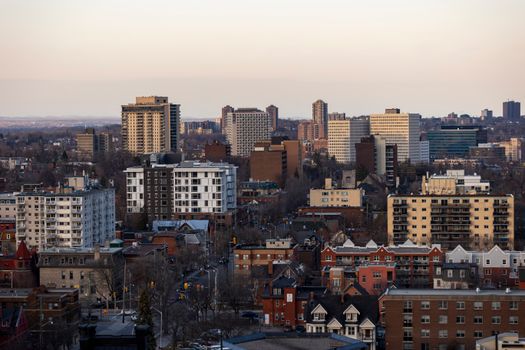
The Widest Price Canyon in Canadian Real Estate
Toronto and Calgary present perhaps the sharpest contrast in major Canadian real estate markets. Toronto's benchmark sits near $1.1 million in early 2026 while Calgary has settled around $580,000, a gap of more than $500,000 for comparable properties. Ottawa, at $650,000, sits closer to Calgary than Toronto in this comparison, which surprises many Ontarians who assume the capital is similarly priced to the GTA.
What $580K Gets You in Calgary
In Calgary, $580,000 means a detached home in a well-established inner-ring neighbourhood like Brentwood, Signal Hill, or Mahogany, often with a triple attached garage, finished basement, and mountain views. In Toronto, $580,000 is a parking-challenged condo in a tower somewhere on the 401 corridor, or a bidding war entry point on a semi-detached in East York.
Toronto's Income vs. Price Disconnect
Toronto generates Canada's highest private-sector incomes across finance, tech, media, and professional services. Bay Street compensation packages are genuinely elite by Canadian standards. Yet even high earners find the city's real estate increasingly stretched. Household incomes of $200,000, exceptional anywhere in Canada, qualify for mortgages that buy modest product in Toronto's market.
Calgary's Volatility Risk
Calgary's affordability comes with a footnote: the energy sector. Alberta's economy follows oil prices with uncomfortable fidelity. The 2015–2016 downturn produced Calgary home price declines of 5–8% from peak and prolonged market stagnation. Buyers who moved for the affordability found themselves in a market that didn't appreciate for years. Toronto's market, despite its dysfunction, has delivered more consistent long-term appreciation.
What Ottawa Residents Can Learn
For Ottawa buyers benchmarking their market, the Toronto-Calgary comparison is instructive. Ottawa's $650,000 average sits in a logical middle ground: more expensive than Calgary but with Ontario stability; dramatically cheaper than Toronto but without Alberta's commodity risk. Ottawa's government-anchored economy produces its own volatility insulation, the federal budget doesn't follow commodity prices.
Migration Trends in 2026
The Ontario-to-Alberta migration wave that accelerated through 2021–2025 has shown some moderation, as Calgary prices have risen and Toronto's market has stabilized. But the flow hasn't stopped. Ottawa residents with private-sector flexibility continue to evaluate the Calgary option as a way to front-load housing equity at lower cost.
The Toronto-Calgary comparison ultimately validates Ottawa as a sensible middle path in Canada's most important housing market debate.