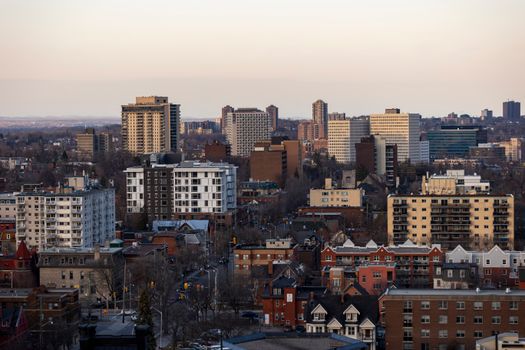
Ottawa's Confederation Line has been operating long enough to generate meaningful real estate data. Five-plus years of transactions around station areas now allow a clear-eyed assessment of which LRT stations have genuinely lifted property values, and which have delivered less than buyers hoped.
The Transit-Oriented Appreciation Thesis
The general principle is well-established in urban economics: properties within 800 metres of rapid transit stations appreciate 5–15% more than equivalent properties farther away, controlling for other variables. Ottawa's Confederation Line provides a live experiment in whether this holds for a mid-sized Canadian capital.
Station-by-Station Analysis
Pimisi and Bayview: These western stations have delivered the clearest appreciation signal. Hintonburg and the LeBreton Flats redevelopment area adjacent to Pimisi have seen benchmark appreciation significantly above Ottawa averages since 2021. Proximity to NCC lands and the continued LeBreton development planning add a long-term appreciation narrative.
Westboro and Dominion: These stations catalyzed substantial condo development along the Richmond Road corridor. Properties within 500 metres of these stations have outperformed the Westboro market as a whole, entry-level condo buyers specifically target the 5–8 minute walk zone.
Tunney's Pasture: Canada's largest federal campus adjacent to the Tunney's station has made this station valuable for federal public servants. The surrounding residential market in Mechanicsville and Hintonburg has benefited from improved transit access to the campus.
Hurdman: The Stage 2 eastern extension integrates at Hurdman, making it a key interchange. Properties in Old Ottawa East near Hurdman have appreciated as the station becomes a more significant network node.
Blair: The eastern terminus of the original Confederation Line served as the primary transfer point for east end buses. The surrounding commercial and residential area has seen steady but not dramatic appreciation, the promise of Stage 2 eastern extension is still the primary driver.
Where LRT Underdelivered
Some station areas have disappointed. St. Laurent and Cyrville stations, surrounded by commercial-industrial land uses, have not generated the residential demand that purely residential station areas attracted. The lack of walkable neighbourhood character around these stations limits their residential appeal.
Stage 2 and Future Appreciation
The Stage 2 extensions, east toward Orleans, south toward Barrhaven, and west toward Kanata, represent the next LRT appreciation cycle. Buyers purchasing within 800 metres of announced but not-yet-built stations are making a calculated bet on transit-induced appreciation, similar to what Westboro buyers experienced pre-2019.
The Ottawa Investor's Playbook
For investors in Ottawa's market, the LRT pattern suggests buying within walking distance of confirmed future stations before construction completion. The price premium builds gradually during construction and accelerates upon opening. Holding periods of 5–8 years from pre-announcement purchase have historically generated the strongest LRT-related returns in comparable Canadian cities.
Ottawa's transit investment continues, and the property value evidence suggests LRT is a genuine, measurable driver of real estate appreciation in the capital.