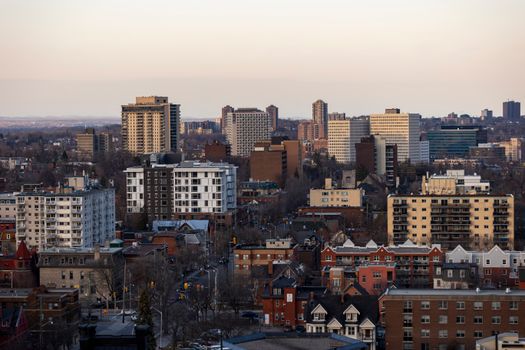
Ottawa's housing market is more accessible than Toronto's or Vancouver's, but every buyer still faces the same federal gatekeeping mechanism: Canada's mortgage stress test. In 2026, understanding how the stress test works, and how to optimize for it, can mean the difference between qualifying for your target neighbourhood and settling for less.
What Is the Mortgage Stress Test?
Introduced in 2018 and periodically updated, the stress test requires Canadian mortgage applicants to qualify at a rate higher than their actual contract rate. The qualifying rate is the greater of:
- Your contract rate + 2%, or
- 5.25% (the floor rate set by the Office of the Superintendent of Financial Institutions)
In early 2026, with 5-year fixed rates around 4.5%–5.0%, most Ottawa buyers qualify at their contract rate + 2% (6.5%–7.0%). This is meaningfully higher than their actual payment rate.
What the Stress Test Does to Ottawa Buying Power
The stress test reduces purchasing power by roughly 20%–25% compared to what you could qualify for without it.
Ottawa example: A household earning $150,000 annually:
- Without stress test: Could qualify for approximately $900,000 mortgage
- With stress test at 7%: Qualifies for approximately $720,000–$750,000
That gap is significant in Ottawa's market. It's the difference between a Westboro semi-detached and a Kanata townhome.
Who Does the Stress Test Apply To?
The stress test applies to all federally regulated lenders (banks, credit unions chartered federally). In 2026, it also applies to:
- Insured mortgages (under 20% down)
- Uninsured mortgages (20%+ down)
- Refinances
- Mortgage switches to new lenders (note: straight renewals with existing lender are exempt)
Provincially regulated credit unions in Ontario may be exempt. Ottawa buyers sometimes access higher qualifying amounts through credit unions like Caisse populaire or Ontario-chartered credit unions.
Strategies Ottawa Buyers Use to Pass the Stress Test
Increase the down payment: More down = smaller required mortgage = easier to qualify.
Extend amortization: Ottawa buyers using 30-year amortization (available since August 2024 for first-time buyers and new construction) qualify for larger loans under the stress test because monthly payments are lower.
Reduce other debt: The stress test considers your Total Debt Service (TDS) ratio. Paying down car loans or student debt before applying meaningfully improves qualifying amounts.
Joint application: Combining two incomes significantly improves qualifying power. Ottawa couples where both partners work in the public service or tech sector often qualify well.
The Political Debate Around the Stress Test
The stress test remains controversial. Critics argue it overheated the market by pushing buyers to their maximum qualifying amounts rather than comfortable ones, and that it's procyclical (tightest when rates are rising, loosest when rates fall). Proponents say it has prevented the kind of over-leveraging seen in the US in 2008.
Ottawa buyers can expect the stress test to remain in place through 2026 and beyond. It's now entrenched as a core piece of Canadian financial regulation.