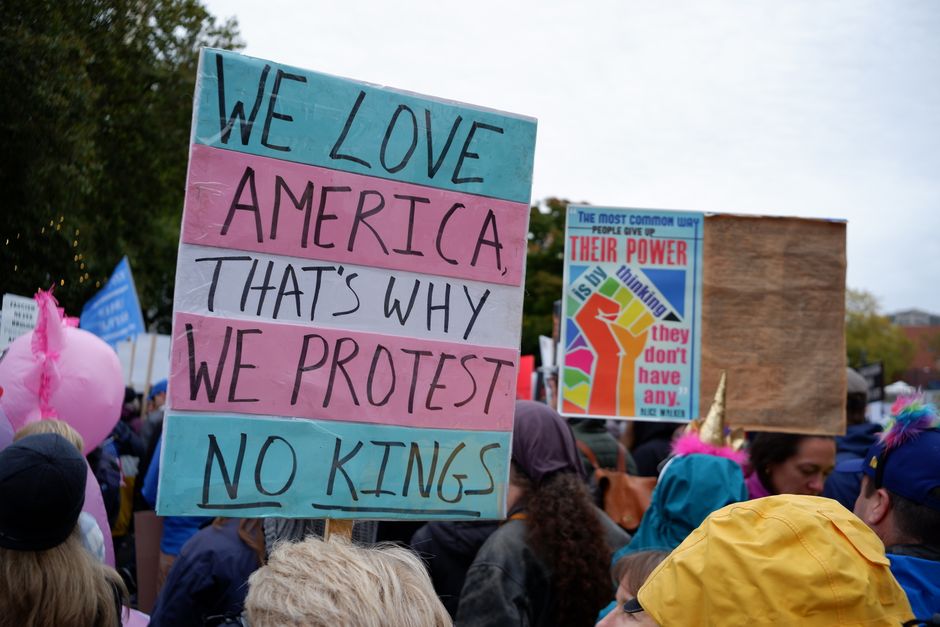
Ottawa has no shortage of protests. From the frozen standoff on Wellington Street in early 2022 to the weekly demonstrations outside Planned Parenthood clinics, the capital has become a stage where Canadians play out their deepest disagreements, loudly, and sometimes badly.
In a recent column for the Ottawa Citizen, writer Brigitte Pellerin takes aim not at the protesters themselves, but at the creeping normalization of protest tactics that prioritize disruption over dialogue. Her target: the need for so-called "bubble laws," legislation that creates protected zones around clinics, schools, and other sensitive sites to keep aggressive demonstrators at bay.
"I'm glad we have a bubble law," Pellerin writes, "but I'm disheartened that it's necessary."
It's a nuanced take in an era that rarely rewards nuance. And it's one worth sitting with, especially in Ottawa, where the right to protest collides almost daily with the rights of residents trying to get to work, access healthcare, or simply walk down the street.
The Protest Paradox
Freedom of expression is a cornerstone of Canadian democracy, and protest has historically been one of its most powerful tools. The marches that pushed for women's suffrage, Indigenous rights, and marriage equality didn't succeed by being polite. They succeeded by being impossible to ignore.
But Pellerin's argument isn't that protest should be quieter. It's that it should be smarter. Screaming at patients entering a clinic doesn't change policy. Blocking an ambulance route doesn't win hearts. Harassing city councillors at their homes doesn't build coalitions.
What it does do is generate backlash, invite legislation, and ultimately shrink the space available for legitimate dissent.
Ottawa as a Case Study
As Canada's capital, Ottawa occupies a unique position. It is simultaneously the seat of federal power and a mid-sized city with real neighbourhoods, real people, and real limits on how much disruption daily life can absorb.
The 2022 convoy occupation made that tension impossible to ignore. Whatever your politics, three weeks of horns, blocked streets, and residents unable to leave their homes without confrontation was a stress test the city hadn't prepared for. The legal aftermath, including new municipal noise bylaws and renewed debate over protest permits, was the direct result.
Bubble laws are a similar reactive measure. They exist because voluntary restraint failed. And that failure, Pellerin suggests, reflects something about how we've come to think about protest: as performance rather than persuasion.
Teaching Better
Pellerin's prescription is civic education, learning not just that we have the right to protest, but how to do it in ways that actually work. Understand your audience. Know your goal. Consider whether your tactics help or hurt your cause.
It sounds almost quaint. But in a city where protests are a near-daily occurrence, it might be exactly the conversation Ottawa needs to have.
The bubble law protects people who need protecting. That part is good. But if we're serious about democracy, we should also be asking why we keep needing more rules to manage the way we disagree, and whether there's a better way forward.
Source: Ottawa Citizen / Brigitte Pellerin opinion column

