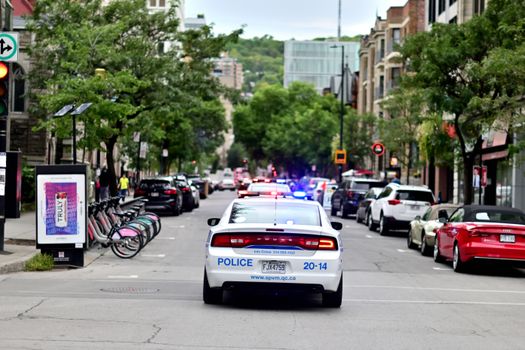
Ottawa may not have self-driving robotaxis rolling through the Glebe or ByWard Market just yet, but the city's transit planners and tech community are keeping a close eye on how autonomous vehicles are performing in cities where they've already launched, and the latest news out of San Francisco is raising some eyebrows.
A new investigation by TechCrunch has revealed that first responders in cities where Waymo operates have had to take manual control of the company's fully autonomous robotaxis during emergency situations. In at least two cases, this happened at active crime scenes, meaning police officers were stepping in to physically move vehicles that had no human driver on board.
What Actually Happened
Waymo's vehicles, which operate without a safety driver, can sometimes stop or behave unpredictably in chaotic environments like accident scenes, police perimeters, or active investigations. When that happens, emergency responders don't have the luxury of waiting for a remote operator to sort things out. They need the road clear, fast.
First responders have reportedly been trained, to varying degrees, on how to interact with autonomous vehicles in these situations. But the fact that police have needed to physically intervene at crime scenes highlights a gap that the industry hasn't fully solved: what happens when a robot car meets a situation it wasn't trained for?
Why Ottawa Should Be Watching
Ottawa is in the early stages of thinking seriously about autonomous and connected vehicles. The city has explored smart mobility corridors, and the broader National Capital Region is home to a growing cluster of mobility-tech companies and researchers at institutions like the University of Ottawa and Carleton University.
As cities like Ottawa look toward the future of transit, especially given ongoing conversations about OC Transpo funding, LRT reliability, and last-mile connectivity, autonomous vehicles are frequently floated as part of the long-term solution. But incidents like these serve as a reminder that the technology, while impressive, still has real-world friction points that need to be ironed out before wide deployment.
The Trust Problem
For autonomous vehicles to work in a city like Ottawa, they'd need to earn the trust of not just riders, but also emergency services. Ottawa's winters alone present challenges that Waymo's San Francisco and Phoenix fleets have never had to contend with, icy roads, reduced visibility, snowbanks eating up lane markings. Add in the complexity of emergency response protocols, and the picture gets more complicated.
The Waymo situation is a useful case study. It shows that even the most advanced AV systems on the market today still require human intervention in edge cases, and that cities need clear frameworks for how first responders interact with autonomous vehicles before those vehicles ever hit local streets.
What Comes Next
Waymo hasn't commented extensively on the specifics of the incidents, but the company has previously acknowledged that its vehicles are designed to pull over safely and that operators can assist remotely. The question is whether "remotely" is fast enough when seconds count.
For Ottawa residents and city planners, the takeaway is simple: autonomous vehicles are coming, but they're not ready to be invisible. The technology still needs transparency, accountability, and, sometimes, a cop with a set of instructions.
Source: TechCrunch, Waymo robotaxi roadside assistance and emergency first responders

