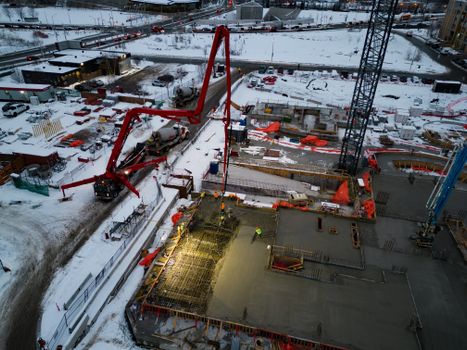
Ottawa's skyline is set for a dramatic change as construction officially kicks off on what will become one of the city's tallest buildings once complete.
A new landmark takes shape
Crews have begun site work on the ambitious tower, which developers say will rank among the tallest structures in Ottawa's downtown core. While the capital has traditionally been known for its low-rise, government-dominated skyline, a legacy of height restrictions meant to preserve sightlines to Parliament Hill, recent years have seen a steady push toward denser, taller development in select districts as the city grapples with a persistent housing crunch.
The project adds to a growing list of high-rise proposals that have been working their way through Ottawa's planning approvals process, as the city looks to accommodate a fast-growing population without sprawling further into surrounding greenbelt and rural areas.
Why height matters for Ottawa
Ottawa has long lagged behind peer cities like Toronto and Montreal when it comes to supertall residential and mixed-use towers. Zoning near Parliament Hill and other federal properties has historically capped building heights to protect views of national landmarks, pushing taller development toward areas like the west side of downtown, LeBreton Flats, and pockets of Centretown where height restrictions are more relaxed.
This new tower's location outside those protected sightline corridors is part of what's making the ambitious height possible. For residents watching the city's ongoing housing affordability struggles, projects like this represent an attempt to add significant density in a single footprint, something Ottawa's official plan has explicitly encouraged as the city aims to direct 60 per cent of new growth to intensification within existing built-up areas rather than new suburban subdivisions.
What locals can expect
For Ottawa residents living or working near the site, the coming months will likely mean construction noise, road and sidewalk closures, and the usual disruptions that come with a major downtown build. Local businesses near the site may see temporary access changes as excavation and foundation work ramps up.
Once complete, the building is expected to add meaningfully to the local housing and commercial supply, and could become a new visual anchor for the downtown skyline, visible from vantage points across the river in Gatineau and from parks along the Ottawa River.
Development of this scale typically unfolds over several years, with excavation and foundation work often the least visible but most time-consuming phase. Ottawa residents curious about the project's progress can expect visible movement, cranes, structural steel, and rising floors, to become apparent later in the build timeline.
As the National Capital Region continues to wrestle with how to balance heritage preservation, sightline protection, and the urgent need for more housing, this project offers an early look at what a taller, denser Ottawa skyline could start to look like in the years ahead.
Source: CTV News