Ottawa's tech community has a new policy development to watch south of the border, and its implications could reach well beyond Washington.
U.S. Senator Bernie Sanders and Representative Alexandria Ocasio-Cortez introduced companion legislation this week that would impose a moratorium on new data center construction in the United States, freezing development until Congress enacts comprehensive artificial intelligence regulation. It's a bold move, and one that's already sparking debate across North America's tech industry.
What the Legislation Actually Proposes
The Sanders-AOC bill would halt the construction of new data centers, the massive, energy-hungry facilities that power everything from cloud computing to AI model training, until lawmakers craft and pass meaningful AI oversight rules. The sponsors argue that the rapid, largely unregulated expansion of AI infrastructure poses risks to energy grids, local communities, and civil liberties that can't wait for the industry to self-regulate.
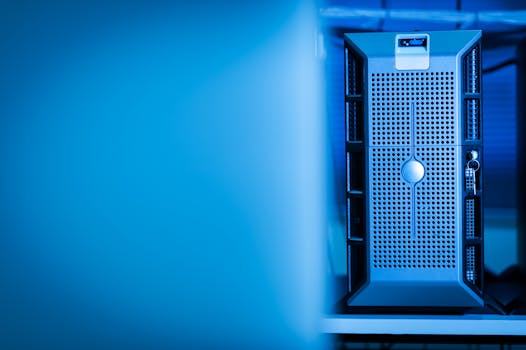
Data centers have become a flashpoint in the broader AI debate. The facilities consume enormous amounts of electricity and water, and their proliferation has drawn scrutiny from environmentalists, housing advocates, and digital rights groups alike.
Why Ottawa Is Paying Attention
Canada, and Ottawa specifically, has been positioning itself as a serious player in the global AI race. The federal government has poured funding into AI research through organizations like the Vector Institute and the Canadian Institute for Advanced Research (CIFAR), and Ottawa's own Kanata North tech corridor is home to hundreds of companies working on AI-adjacent technologies.
Any slowdown in U.S. data center expansion could have a spillover effect on Canadian infrastructure investment. Tech companies looking for stable, regulation-friendly environments to build out their compute capacity might increasingly look north, and Ottawa, with its relatively affordable land, cooler climate (ideal for data center cooling costs), and talent pipeline from the University of Ottawa and Carleton University, is a natural candidate.
At the same time, the legislation is a signal that democratic governments are increasingly willing to pump the brakes on unchecked AI infrastructure growth. Canada's own AI regulation discussions, including ongoing consultations around Bill C-27, could accelerate if Washington moves first.
The Bigger Picture
The Sanders-AOC proposal is unlikely to pass easily in the current U.S. political climate, but its introduction marks a significant moment: for the first time, prominent lawmakers are explicitly tying AI regulation to physical infrastructure in a concrete legislative package.
For Ottawa's tech workers, entrepreneurs, and policymakers, the message is clear, the era of building first and regulating later may be coming to an end, on both sides of the border.
Whether you see that as a necessary course correction or an obstacle to innovation likely depends on where you sit in the ecosystem. But one thing is certain: the conversation about how, where, and under what conditions AI infrastructure gets built is only getting louder.
Ottawa's tech sector would do well to stay tuned.
Source: TechCrunch, Bernie Sanders and AOC propose a ban on data center construction

