Toronto Makes a Bold Security Move, And Ottawa Is Watching
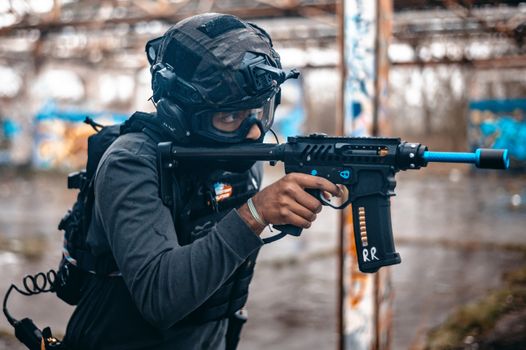
Ottawa, no stranger to high-security events and federal policing, is paying close attention as Toronto Police announced this week the creation of a new counter-terrorism unit and specialized task force that will see officers armed with semi-automatic patrol rifles deployed at key locations throughout Canada's largest city.
The Toronto Police Service confirmed the move, saying the new unit is designed to respond more rapidly and effectively to evolving public safety threats in an urban environment. Officers will be stationed at what the service describes as "key locations", presumably high-traffic areas, transit hubs, and public landmarks.
Why This Matters Beyond Toronto
For Canadians, this marks a visible escalation in how major city police forces are preparing for worst-case scenarios. It's a shift that echoes practices already common in cities like London, New York, and Paris following high-profile attacks on public spaces.
But the conversation doesn't stop at the 416. Ottawa's own security landscape is uniquely complex. As the nation's capital, the city hosts Parliament Hill, the Prime Minister's residence, dozens of foreign embassies, and is a regular stage for large-scale protests, state visits, and national events. The October 2014 shooting at the National War Memorial and Centre Block remains a defining moment in how Canadians think about security in public, symbolic spaces.
Ottawa's security is largely managed by a mix of the Ottawa Police Service, the RCMP, and Parliamentary Protective Service, each with distinct mandates and jurisdictions. The RCMP's Emergency Response Team already provides a heavily armed presence for federal sites, but the question of how city police handle broader urban threats is one that Ottawa, like Toronto, must continually reassess.
A National Conversation About Policing and Public Safety
Toronto's announcement is likely to spark debate across Canada about the role of heavily armed officers in everyday public life. Supporters argue that visible, well-equipped units serve as a deterrent and can save lives in the critical first minutes of an attack. Critics raise concerns about over-militarization of police forces and the potential chilling effect on public space.
Civil liberties advocates have long cautioned that increasing firepower without robust community oversight frameworks risks eroding public trust, a concern that applies equally in Ottawa, where residents have watched the Ottawa Police Service navigate the fallout from the 2022 Freedom Convoy occupation.
What Comes Next
Toronto's new unit will likely be closely observed by police services across the country, including Ottawa's. If the model proves effective, and if public safety threats continue to evolve. It may be only a matter of time before similar conversations happen at Ottawa Police headquarters on Elgin Street.
For now, Ottawans can watch Toronto's rollout and consider what urban security looks like in a city that is simultaneously a national symbol and a place where people just want to grab a coffee, ride the LRT, and go about their day.
Source: CBC News Toronto. Original reporting by CBC's Toronto bureau.

