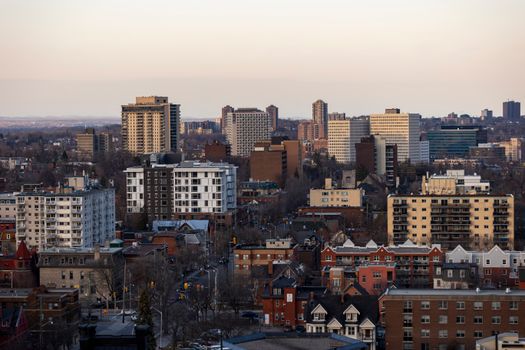
Ottawa sits at roughly $650,000 for an average home in early 2026, which puts it in an interesting position: well above Edmonton's $420,000 but far below Toronto's staggering $1.1 million. When buyers ask where the best value in Canada lies, the Toronto-Edmonton comparison is the most dramatic data point available.
The Toronto Premium
Toronto's average home price has stayed above $1 million since 2021, with only brief dips during rate hike cycles. In early 2026, the average sits near $1.1 million. For that price, buyers in the 416 are often competing for semi-detached homes in older neighbourhoods or condos in newer towers. The job market, cultural infrastructure, and transit access justify the cost for many, but the math demands either a very high income or significant family help.
Edmonton's Case for Itself
Edmonton's $420,000 average makes it the most affordable major city in Canada by a wide margin. Detached homes in established neighbourhoods like Glenora or Westmount routinely list under $600,000. For remote workers or those in the energy sector, Edmonton offers genuine square footage and freehold ownership at prices that feel almost fictional to Toronto buyers.
Edmonton's trade-off includes a less diversified economy historically tied to oil, harsher winters than most Canadian cities, and a downtown core that is still rebuilding its vitality. The city has invested heavily in the ICE District and river valley parks, but urban walkability lags behind eastern cities.
What Ottawa Buyers Learn from This Gap
Ottawa's federal government employment base keeps prices stable but not explosive. The $650,000 average in Ottawa buys a detached home in Barrhaven or Orleans, neighbourhoods with good schools, transit links, and community amenities. That's simply not possible in Toronto at the same price point.
For Ottawa buyers eyeing investment properties, Edmonton occasionally appears on radar for its yield potential. Rental demand in Edmonton has strengthened as Alberta's population grows through interprovincial migration from BC and Ontario. Cap rates in Edmonton can reach 5–6%, compared to 2–3% in Toronto.
The Mortgage Reality
At current five-year fixed rates around 4.5%, a $1.1 million Toronto purchase with 20% down requires monthly mortgage payments near $4,900. The same math on an Edmonton home at $420,000 produces payments closer to $1,870. The difference: over $3,000 per month, is life-changing for household budgets.
Who Should Consider Each City
Toronto makes sense for those whose careers are rooted in finance, media, or tech industries concentrated there. Edmonton makes sense for buyers prioritizing space, affordability, and careers in energy, healthcare, or education. Ottawa occupies the middle: stable, bilingual, with a growing tech sector and housing that remains more accessible than Vancouver or Toronto.
For Ottawa residents watching this comparison, the takeaway is that the capital's $650,000 average remains a relative bargain in Canada's national context, even if it doesn't feel that way locally.