How a Bell Labs Engineer Accidentally Changed Music Forever
Ottawa's thriving music and tech communities share more history than most people realize, and the story of the vocoder is a perfect example of how military innovation bleeds into everyday culture in ways nobody ever predicted.
A hundred years ago, an engineer named Homer Dudley at Bell Labs was trying to solve a mundane problem: how do you send phone calls more efficiently over copper telephone lines? His solution was elegant, build a machine that could both capture and synthesize the human voice, stripping it down to its essential components for transmission. He called it the vocoder, short for voice encoder.
Dudley's invention worked by analyzing the frequencies and patterns of speech, compressing that information, and then reconstructing it on the other end. It wasn't glamorous. It wasn't artistic. It was engineering in its purest form.
Secret Calls Across the Atlantic
Then World War II happened, and the vocoder found its true calling, for a while, at least.
The Allies quickly recognized that the vocoder's ability to break down and reconstruct speech could be weaponized for secure communications. If you scrambled the encoded signal, only someone with the right decoding equipment could reassemble it into intelligible speech. The technology played a key role in encrypted transatlantic communications between Allied leaders, allowing sensitive war strategy to travel across the ocean without falling into enemy hands.
It was one of the most consequential pieces of communication technology in modern military history, and almost nobody knew it existed.
Then Music Got Its Hands on It
After the war, the vocoder's declassification opened the door to experimentation. Musicians and electronic pioneers began to realize that a machine designed to synthesize the human voice could do something extraordinary: it could make instruments talk.
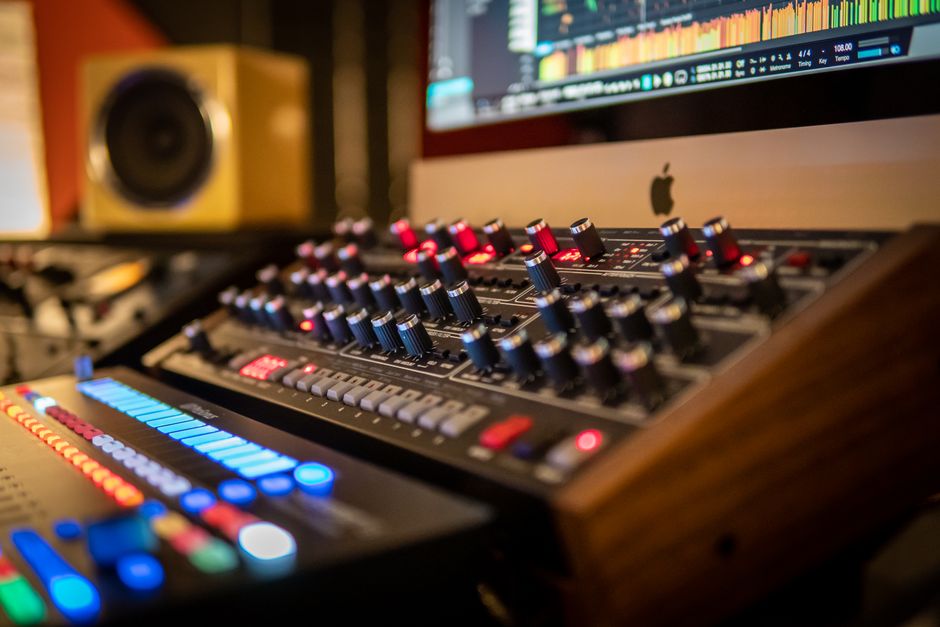
Throughout the 1970s and 1980s, the vocoder became a staple of electronic, funk, and pop music. Artists used it to create that iconic robotic vocal effect, part human, part machine. That showed up everywhere from disco floors to synth-pop albums to hip-hop production. Kraftwerk, Parliament-Funkadelic, Daft Punk, Kanye West, the lineage runs deep and wide.
The technology that once scrambled Churchill's voice so the Nazis couldn't eavesdrop was now making people dance.
Why Ottawa Should Care
For Ottawa's growing tech and creative communities, the vocoder's story is a compelling reminder of how government and military R&D can unexpectedly reshape culture. The National Capital Region is home to a dense cluster of federal tech contractors, defence researchers, and increasingly, a vibrant music and arts scene centred around venues, festivals, and independent studios.
The next time you hear that unmistakable robot-voice effect at a show at Bronson Centre or through someone's headphones on the O-Train, you're listening to the ghost of wartime cryptography. That's the kind of strange, fascinating tech history that connects Ottawa's defence-sector identity to its cultural life in ways that rarely get told.
The full story of the vocoder, including its exact role in WWII communications and the artists who popularized it, is explored in depth by The Verge's Version History podcast.