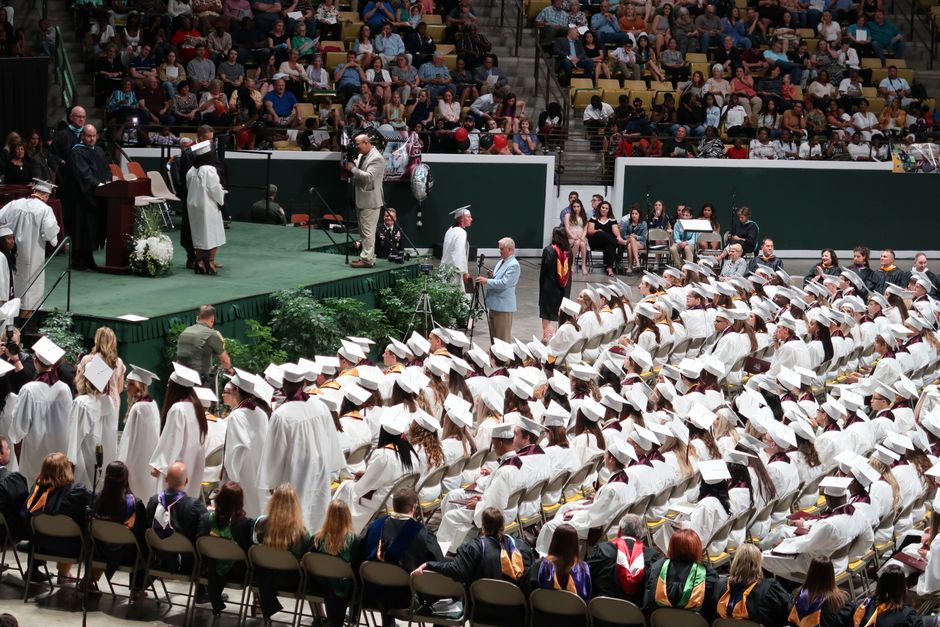
Stanford University's commencement is usually a polished, feel-good affair, pomp, circumstance, and a marquee speaker dispensing life advice to the next generation of Silicon Valley talent. This year it became a protest stage. When Google and Alphabet CEO Sundar Pichai took the podium, a section of the graduating class met him with sustained boos, and dozens of students rose from their seats and walked out.
What sparked the protest
The demonstration centred on Google's defense and government contracts, specifically the company's cloud and AI work tied to Israel and to U.S. Immigration and Customs Enforcement (ICE). Protesting students and faculty have for months criticized agreements like Project Nimbus, Google's multibillion-dollar cloud computing deal with the Israeli government, arguing that the technology can be used to power surveillance and military operations.
The addition of ICE to the list of grievances reflects a broader anxiety on American campuses: that the same machine-learning tools being celebrated in computer science lecture halls are being sold to agencies students view as instruments of harm. For many in the audience, watching the head of one of the world's most powerful AI companies accept an honoured speaking slot was a contradiction they were unwilling to sit through quietly.
AI at the heart of campus tension
This is not an isolated moment. Over the past two years, graduation ceremonies and tech-company recruiting events across the United States have become recurring sites of confrontation. The throughline is artificial intelligence, and, more pointedly, who profits from it and who pays the price.
Google, like its rivals, has poured enormous resources into AI and has openly pursued government and defense revenue as a growth engine. That strategy has collided with a generation of students and employees who came of age believing the industry's "don't be evil" mythology. The walkout at Stanford is a vivid sign that the gap between corporate ambition and worker sentiment has not closed.
How Google has responded
Google has consistently maintained that its cloud contracts are governed by its terms of service and AI principles, and that Project Nimbus is not directed at military or intelligence work involving weapons or surveillance. The company has fired employees who staged sit-ins over the Israel contract in the past, framing the protests as workplace disruptions rather than legitimate dissent, a stance that has only intensified the activism.
Pichai, who did not directly address the protest from the stage, continued his prepared remarks as students filed out. Neither Stanford nor Google issued an immediate detailed statement on the disruption.
Why it matters
The scene says less about one CEO's bad afternoon than about a structural shift. As AI becomes infrastructure for governments, militaries, and enforcement agencies worldwide, the companies building it face mounting pressure from the very talent pipeline they depend on. Stanford feeds Silicon Valley; when its graduates boo, the industry's future workforce is sending a message about the deals it will and won't accept.
For Pichai and his peers, the calculus is becoming harder: lucrative government contracts on one side, an increasingly vocal and organized base of engineers and graduates on the other.
Source: TechCrunch.

