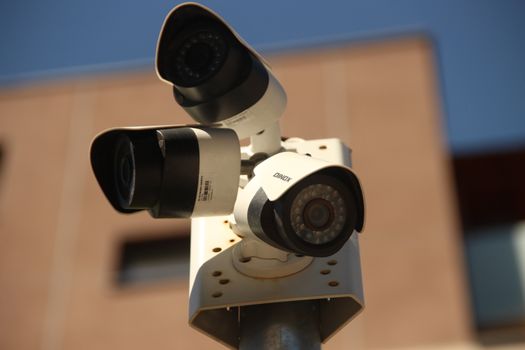
At least 11 African governments have spent more than $2 billion on Chinese-built AI mass surveillance technology, and experts warn the systems are violating citizens' fundamental rights with almost no regulatory oversight.
A new report by the Institute of Development Studies found that countries including Kenya, Ethiopia, Zimbabwe and Zambia have deployed facial recognition systems and movement-tracking infrastructure supplied primarily by Chinese firms including Huawei, ZTE and Hikvision. The systems were often sold as part of broader "smart city" packages bundled with other infrastructure investments.
What the Technology Does
The systems go well beyond basic closed-circuit cameras. According to the report, the most advanced deployments include real-time facial recognition capable of identifying individuals in crowds, license plate recognition networks covering major highways, cell phone location tracking integrated with police databases, and social media monitoring tools capable of flagging individuals based on their online activity.
Experts say the technology's deployment has had a measurable chilling effect on civil society, journalism, and political opposition in several countries. In Zimbabwe, for example, opposition activists have reported surveillance intimidation that they believe is linked to the Chinese-supplied monitoring infrastructure.
The National Security Justification
Governments that have purchased the technology argue it is necessary for crime prevention and counterterrorism. But the report's authors found that in most cases, the systems were deployed without meaningful privacy legislation, independent oversight, or public debate, and that "national security" was being used as a blanket justification for surveillance that went far beyond any proportionate security purpose.
Canada and the Broader Debate
The findings resonate in Canada, which has had its own contentious debates about facial recognition technology, most prominently after it emerged that the RCMP had used Clearview AI's facial recognition service without public disclosure. Ottawa and other Canadian cities have been grappling with how to regulate AI surveillance in public spaces.
The federal government's proposed AI Act includes provisions on high-risk AI systems, which would include mass surveillance applications. For Ottawa residents and civil liberties advocates, the African experience serves as a cautionary tale about what can happen when powerful surveillance technology is deployed without robust democratic guardrails.
Source: The Guardian

