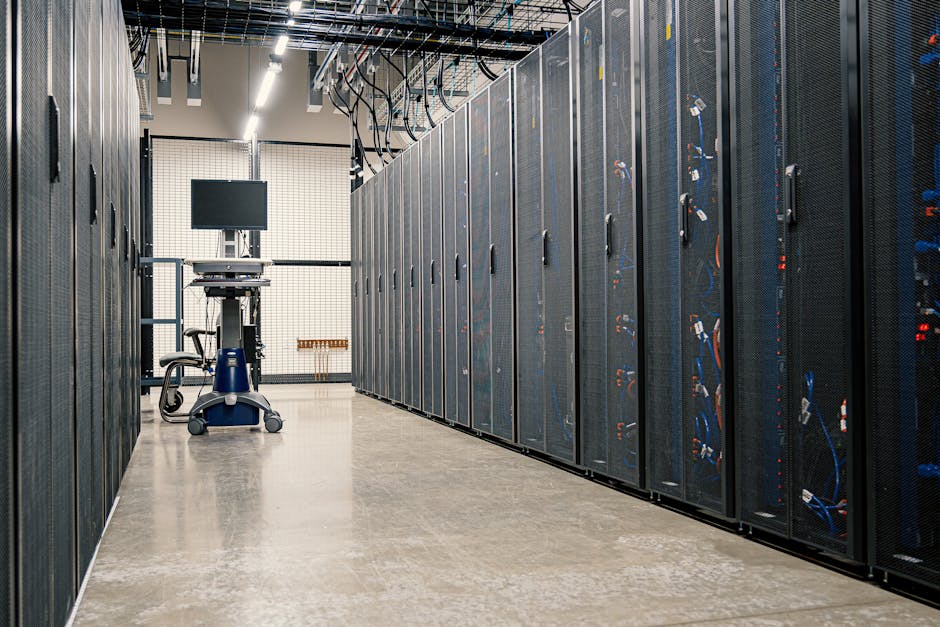
Canada's digital infrastructure is getting a massive shot in the arm: Bell has announced a 300MW data centre in Saskatchewan, one of the largest in the country's history. The announcement signals a major push by one of Canada's biggest telecoms to expand the nation's data capacity at a time when AI workloads and cloud demand are exploding.
What 300MW Actually Means
To put 300 megawatts into perspective: that's enough power to run tens of thousands of homes, and it's the kind of scale typically associated with hyperscaler facilities built by Google, Amazon, or Microsoft. For a Canadian telecom to commit to a facility of this size is a significant statement about where Bell sees the future of Canadian digital infrastructure.
Data centres at this scale are critical for handling the surging demand for AI model training, cloud computing, and enterprise data storage. As more Canadian businesses move operations to the cloud and AI adoption accelerates across industries, the country needs more domestic data centre capacity, and Bell is betting big on Saskatchewan to deliver it.
Why Saskatchewan?
Saskatchewan offers a combination of factors that make it attractive for large-scale data centre development: access to relatively affordable and increasingly renewable energy, available land, and cooler average temperatures that reduce cooling costs, a significant operational expense for any data centre. The province has also been actively courting tech investment as part of broader economic diversification efforts.
What It Means for Canada's Tech Sector
A facility of this scale will create construction jobs in the near term and long-term technical operations roles once the centre is running. More broadly, it strengthens Canada's position as a viable home for data-intensive industries that might otherwise route their workloads through American facilities.
For Canadian businesses concerned about data sovereignty, particularly in light of ongoing trade tensions with the United States, having more domestic data centre capacity is genuinely important. Storing and processing Canadian data on Canadian soil reduces exposure to foreign regulatory environments and potential cross-border data access concerns.
The federal government has also been pushing for Canada to develop a stronger domestic AI and cloud infrastructure ecosystem. Bell's Saskatchewan announcement fits neatly into that national narrative.
The Bigger Picture
Bell isn't alone in expanding Canadian data centre capacity. Other major players have been making similar moves, and international hyperscalers have been investing in Canadian facilities as well. The cumulative effect is a meaningful upgrade to the country's digital backbone, one that positions Canada to compete in the AI era rather than simply being a consumer of foreign cloud services.
Source: MobileSyrup