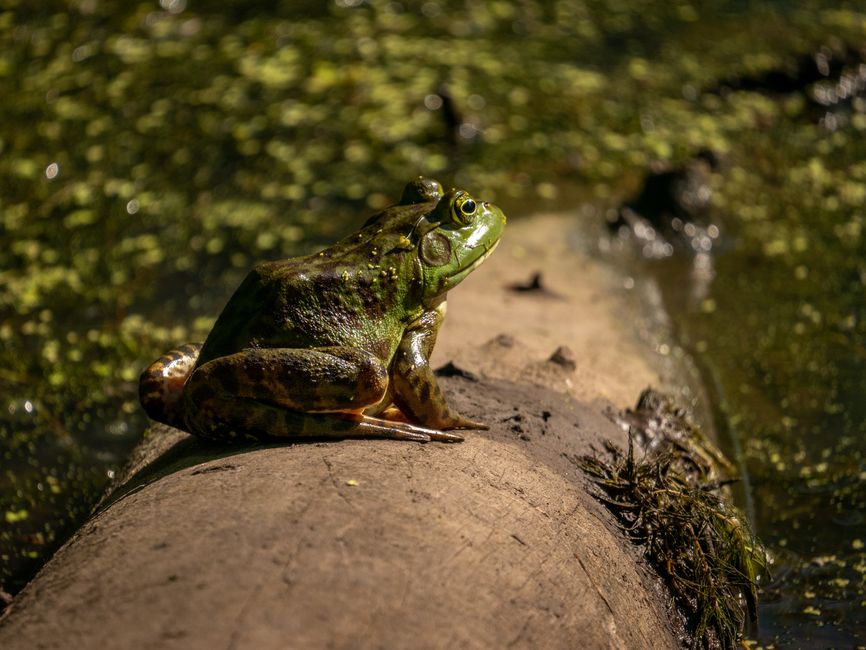
Residents in British Columbia's Comox Valley are rolling up their sleeves and wading into local lakes, all in the name of protecting native wildlife from an aggressive invader.
A grassroots fight against the bullfrog
A group of locals on Vancouver Island has come together to halt the spread of the invasive American bullfrog, a species that has been steadily muscling its way into lakes and water bodies across the region. The community-led effort centres on hands-on action, with tadpole-trapping workshops set to begin this weekend.
The American bullfrog isn't native to British Columbia, and that's exactly the problem. Where it takes hold, it tends to dominate, out-competing and even eating native amphibians, fish, and other small creatures. Left unchecked, the population can balloon quickly, since a single female can lay tens of thousands of eggs at a time.
Why tadpoles are the target
Tackling the bullfrog at the tadpole stage is a smart move. Adult bullfrogs are notoriously difficult to catch: they're fast, wary, and can cover a lot of ground. Tadpoles, on the other hand, are concentrated in the water and easier to trap in large numbers, giving volunteers a better shot at slowing the species before it matures and reproduces.
The weekend workshops are designed to teach residents how to identify and trap the tadpoles safely, turning concerned neighbours into a coordinated removal crew. It's the kind of citizen-science effort that has proven effective elsewhere, where consistent community trapping over multiple seasons can meaningfully knock back invasive populations.
A bigger pattern across Canada
The Comox Valley campaign is part of a broader Canadian story. Invasive species, from bullfrogs to zebra mussels to certain plants, have become a growing headache for ecosystems coast to coast, and provincial agencies increasingly lean on local volunteers to spot and stop them early. Grassroots groups often end up being the front line of defence, simply because they know their local waters best.
For anyone who's spent time around a pond or marsh, the stakes are easy to understand: native frogs, salamanders, and the birds and fish that depend on them all lose ground when an aggressive newcomer arrives. Protecting that balance is what's driving Comox Valley residents to give up their weekend for waders and traps.
How to get involved
While the action is centred on Vancouver Island, the model is one any community could borrow. Anyone curious about invasive amphibians in their own area can usually connect with regional invasive-species councils or naturalist groups to learn how to identify and report sightings. Early detection, as the Comox Valley crew is demonstrating, is everything.
For now, all eyes are on the lakes of the Comox Valley, where a determined group of locals is proving that protecting native wildlife sometimes starts with a net, a bucket, and a willing neighbour.
Source: CBC News (British Columbia).

