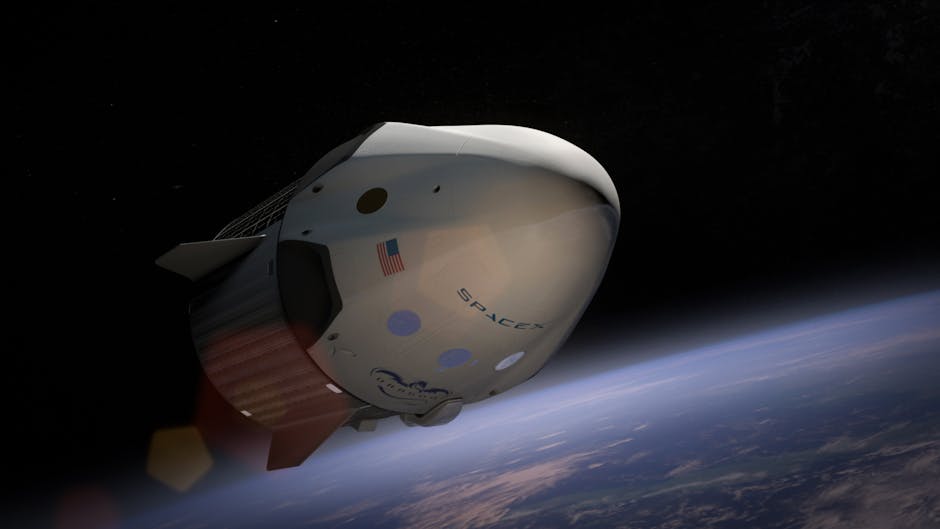
The Sky Is No Longer the Limit for AI Infrastructure
In a move that sounds more like science fiction than a business strategy meeting, Google and SpaceX are reportedly in talks to build data centers in orbit. The two tech giants are exploring the idea of launching computing infrastructure into space, positioning it as a future home for the massive compute demands that artificial intelligence requires.
The talks, first reported by TechCrunch, represent a striking convergence between two of the most ambitious companies in technology. Google, the search and cloud giant, brings years of data center expertise and a booming AI business. SpaceX, Elon Musk's rocket company, brings the launch capability to actually put hardware in orbit.
Why Space?
The pitch, in short, is scale and cooling. Ground-based data centers face very real constraints: land, power, water for cooling, and increasingly, neighbourhood opposition. Space, at least in theory, offers virtually unlimited real estate, direct exposure to the cold vacuum for thermal management, and freedom from terrestrial permitting headaches.
For AI workloads in particular, the compute demands are staggering. Training large language models and running inference at scale consumes enormous amounts of electricity. The data center industry is already straining power grids in places like Virginia, Texas, and Ireland. Moving some of that compute off-planet is a genuinely novel answer to a genuinely difficult problem.
The Cost Problem
Here's the catch: launching anything into orbit is still extraordinarily expensive, even as SpaceX's Falcon 9 and Starship rockets have dramatically reduced per-kilogram costs compared to a decade ago. A data center requires enormous amounts of hardware, servers, networking gear, power systems, cooling, all of which adds up to serious mass.
Right now, the economics don't pencil out for general-purpose cloud computing. But the framing here is forward-looking. Both companies appear to be betting that launch costs will continue to fall, that AI compute demand will continue to rise, and that the intersection of those two curves will eventually make orbital data centers viable.
What It Would Take
An orbital data center wouldn't just be a server rack on a satellite. It would require reliable power (likely solar), some form of thermal management in the extreme temperature swings of low Earth orbit, radiation hardening for sensitive components, and robust communication links back to Earth, likely via SpaceX's own Starlink constellation, which would be a convenient vertical integration.
Maintenanceability is another open question. On the ground, a technician can swap a failed drive in minutes. In orbit, that becomes a multi-million dollar service mission.
A Signal of Where Big Tech Is Heading
Even if orbital data centers are years or decades away from being cost-competitive, the fact that Google and SpaceX are having these conversations says something important about how the industry is thinking. The AI boom has created a land rush for compute capacity, and companies are now looking at literally every option, including the final frontier.
For now, the talks are exploratory. But in an industry that went from "the cloud" being a metaphor to a physical reality in under two decades, it would be unwise to dismiss the idea entirely.
Source: TechCrunch

