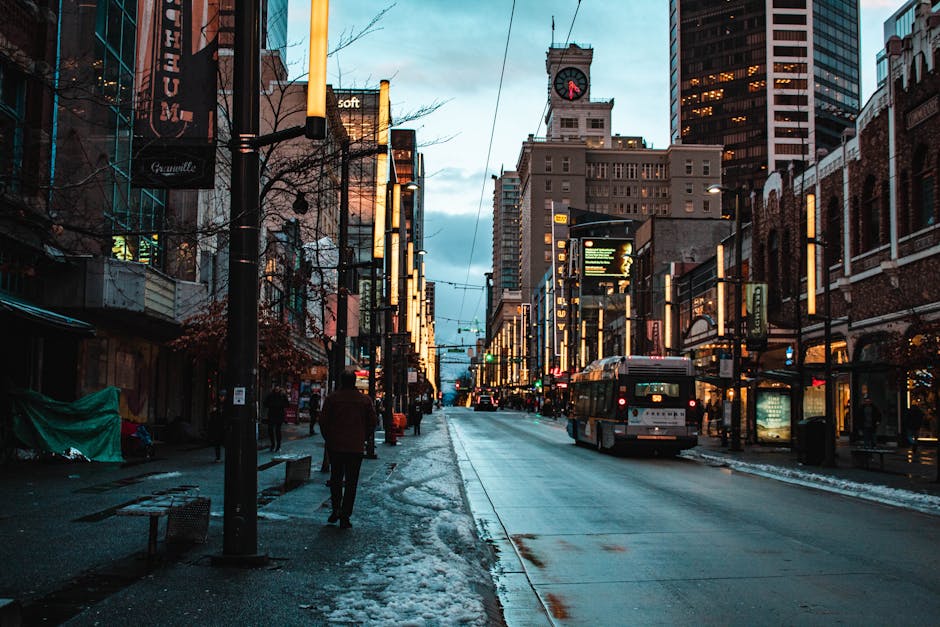
Ottawa is often described as where French and English Canada meet, but in real estate terms, the country's cultural divide is best illustrated by Vancouver and Montreal: two world-class cities separated by roughly $650,000 in average home prices.
Vancouver's $1.2 Million Reality
Vancouver's average home price in early 2026 sits near $1.2 million, making it the most expensive major city in Canada. Geography, mountains to the north, the US border to the south, and the Pacific to the west, severely constrains land supply. Detached homes in desirable neighbourhoods like Kitsilano or Mount Pleasant routinely exceed $2 million. The condo market offers some relief, but even smaller units in newer towers list above $600,000.
Vancouver's appeal is undeniable: mild winters, world-class outdoor recreation, a thriving film and tech sector, and one of Canada's most diverse food scenes. But the math for buyers is brutal. Even with a household income of $200,000, Vancouver homeownership requires either an enormous down payment or generational wealth.
Montreal at $550,000
Montreal's average of $550,000 makes it one of Canada's best-value major cities. Unlike most Canadian housing markets, Montreal maintained lower prices for decades due to Quebec's language politics, lower immigration historically, and rent controls that kept tenant churn low. That changed sharply after 2020. Prices have risen significantly but remain below Ottawa's $650,000, notable given Montreal's larger population and cultural cachet.
For buyers, Montreal offers genuine character-filled housing stock: stone triplexes in Plateau-Mont-Royal, century-old homes in Outremont, and new condos along the waterfront. The lifestyle, café culture, festivals, cycling infrastructure, a world-class university ecosystem, rivals any city in North America.
Ottawa in the Middle
Ottawa's $650,000 average places it slightly above Montreal and dramatically below Vancouver. For federal public servants considering transfers or remote workers with flexibility, Montreal increasingly surfaces as the rational choice: lower prices, lower taxes in some brackets, and a quality of life many describe as superior to Ottawa's.
For those drawn west, Vancouver's tech sector, Amazon, Microsoft, and scores of startups, offers salaries that attempt to compensate for housing costs, though rarely fully.
Language and Lifestyle Factors
Montreal's French-language environment remains a genuine consideration for Anglophone buyers. While McGill and Concordia maintain strong English-language communities, navigating daily life, schooling, and provincial bureaucracy in Quebec requires at minimum functional French. Vancouver operates entirely in English with a significant Mandarin-speaking community in Richmond and Burnaby.
The Investment Lens
Montreal offers better rental yields than Vancouver, where cap rates can fall below 2% on high-price properties. Ottawa investors watching both markets note that Montreal's rising rents, up 8–12% annually in some arrondissements, combined with lower entry prices make it an attractive alternative to local investment.
For Ottawa buyers, both cities represent extremes. Montreal is the accessible dream; Vancouver is aspirational math that rarely pencils out.

