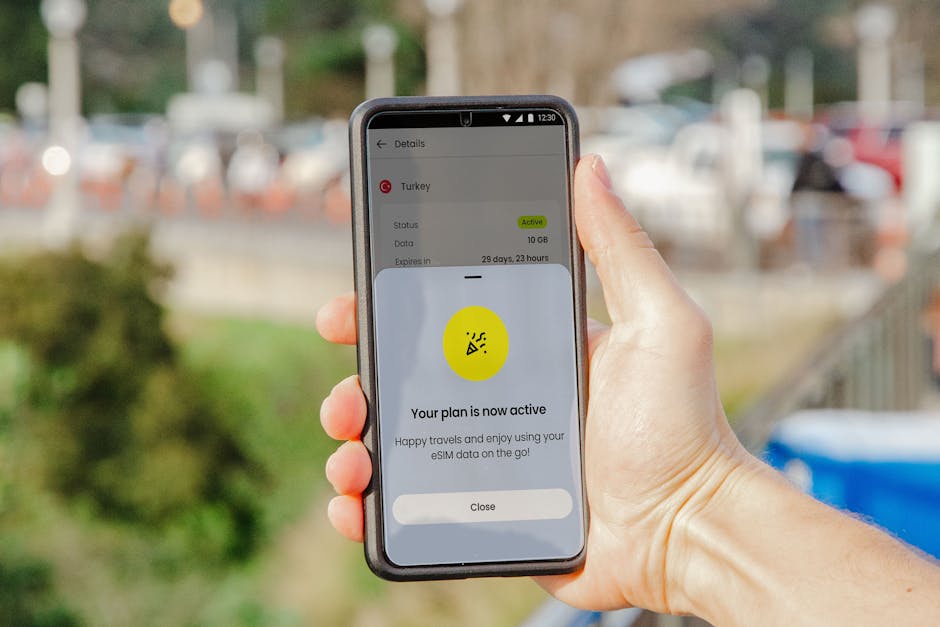
Truecaller, best known for helping hundreds of millions of users identify unknown callers and block spam, is making a bold move into the connectivity business, launching its own eSIM product in a bid to diversify well beyond its original roots.
The company announced that its eSIM offering will roll out across 29 countries, giving users access to data plans ranging from 1 GB valid for 7 days to 20 GB over a 30-day period. It's an ambitious pivot for an app that built its reputation on caller identification, and it signals how consumer tech companies are increasingly looking to bundle telecommunications services to unlock new revenue streams.
What Is an eSIM?
An eSIM, short for embedded SIM, is a digital version of the traditional plastic SIM card. Rather than swapping chips when you travel or switch carriers, an eSIM lets you download a carrier profile directly onto a compatible device. For frequent travellers, remote workers, or anyone who's ever scrambled to find a local SIM at a foreign airport, eSIMs have rapidly become the go-to solution for affordable, flexible international data.
Why Truecaller Is Making This Move
For years, Truecaller has funded its free service through advertising and optional premium subscriptions. But those revenue models have ceilings, particularly as the global ad market grows more competitive. The travel eSIM space, by contrast, is booming, driven by the rise of remote work and a post-pandemic surge in international travel.
By embedding eSIM purchasing directly into its app, Truecaller is positioning itself to compete with established players like Airalo, Holafly, and a growing number of mobile virtual network operators (MVNOs). Crucially, Truecaller already has an enormous installed base in markets across South Asia, Africa, and Southeast Asia, regions where affordable cross-border connectivity is a genuine daily need, not just a travel luxury.
The Plans on Offer
Truecaller's initial lineup starts at 1 GB of data valid for 7 days and scales up to 20 GB over 30 days. Launching across 29 countries from the outset suggests the company is going broad rather than soft-launching in one test market, a confident first step.
Part of a Bigger Pattern
Truecaller's eSIM push fits neatly into a wider trend of consumer apps expanding into adjacent services. Fintech apps have added insurance and lending; ride-share platforms moved into grocery delivery; now caller ID apps are selling data plans. The common thread is a large, loyal user base that can be monetized through new product layers without needing to acquire entirely new customers.
Whether Truecaller can carve out meaningful market share against entrenched eSIM providers is still an open question. But with its reach across some of the world's most connectivity-hungry markets, it's not a bet without logic.
Source: TechCrunch

