A Long-Standing Anti-Nuclear Stance
Canada has never built a nuclear weapon, and it has spent decades championing non-proliferation on the world stage. From signing the Nuclear Non-Proliferation Treaty in 1970 to consistently voting in favour of disarmament resolutions at the United Nations, Ottawa has built its international identity in part around staying out of the nuclear weapons club. That hasn't changed. But according to a new wave of analysis, the country's theoretical capacity to build a weapon, should its political calculus ever shift, has quietly grown.
Why the "Breakout Time" Matters
National security analysts talk about something called "breakout time": how long it would take a country with no nuclear weapons program to actually produce one, if it decided to. For Canada, that number has traditionally been treated as a non-issue, given the country's deep commitment to non-proliferation treaties and its lack of any weapons-grade enrichment infrastructure. But civilian nuclear expansion changes the underlying math. Canada operates one of the largest fleets of power reactors in the world, is a major uranium producer, and has been investing heavily in next-generation reactor technology, including small modular reactors. Advanced enrichment and reprocessing know-how developed for entirely peaceful purposes can, in theory, shorten the technical runway to weapons capability even without any change in intent.
Federal Politics and the Nuclear Question
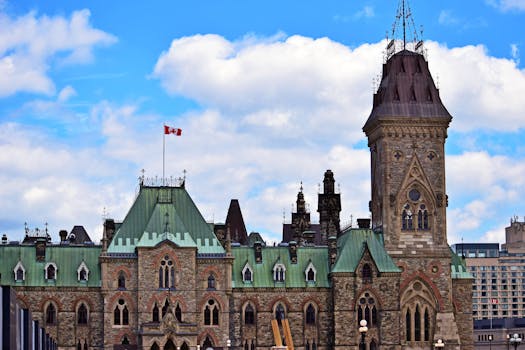
The federal government has shown no appetite for reversing its non-nuclear-weapons policy, and there is no indication that's about to change. Still, the conversation is resurfacing at a moment when global security dynamics are shifting: NATO allies are debating defence spending commitments, geopolitical tensions with nuclear-armed states are elevated, and Canada is under renewed pressure to clarify its long-term defence posture. Federal politicians in Ottawa, where defence policy is set and debated on Parliament Hill, have so far kept the focus on conventional military spending and NORAD modernization rather than any nuclear ambitions.
What Ottawa-Based Analysts Are Watching
Ottawa is home to much of the country's defence and foreign policy establishment, from the Department of National Defence to think tanks that track non-proliferation issues closely. Analysts in the capital note that a shrinking breakout time doesn't equal intent, but it does mean Canada's civilian nuclear growth needs to be paired with continued transparency to allies and international watchdogs like the International Atomic Energy Agency. That balancing act, growing a booming civilian nuclear sector while reaffirming a non-weapons stance, is likely to stay on the radar in federal policy circles for years to come.
The Bottom Line
Canada isn't building a bomb, and nothing in current federal policy suggests that will change. But as the country doubles down on nuclear energy investment, the technical distance between "could" and "would" is narrowing, a nuance defence watchers say deserves more public attention even if the political will remains firmly anti-nuclear.
Source: CBC News