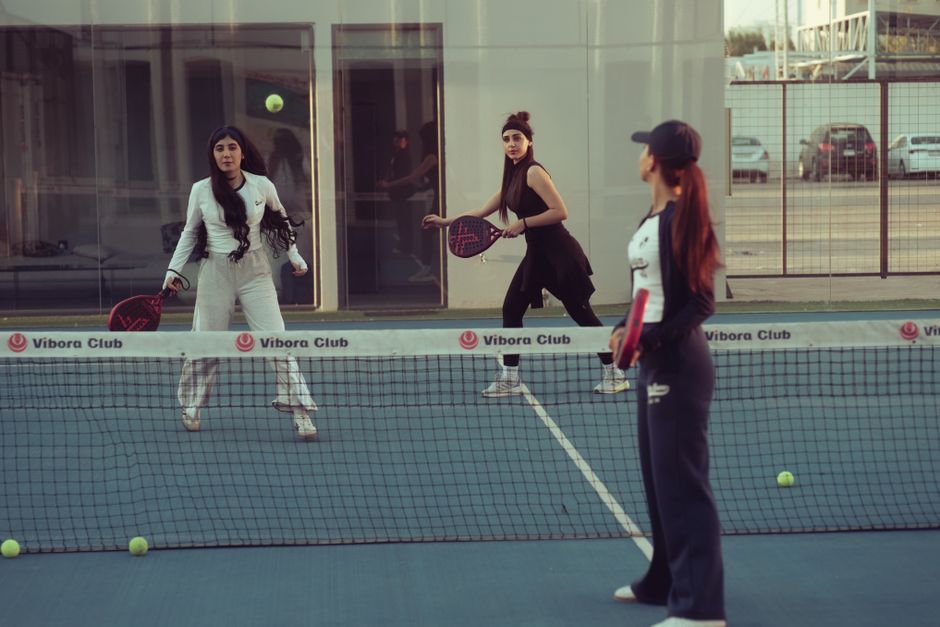
Just when Canadians thought they had a handle on the pickleball craze, another racquet sport is muscling in on court time. Padel, a fast, social game born in Mexico and wildly popular across Europe and Latin America, is finally catching on here, and demand is already outpacing the number of courts available.
What exactly is padel?
Padel is played on an enclosed court roughly a third the size of a tennis court, with glass walls that keep the ball in play much like squash. It's almost always played in doubles, uses a solid stringless racquet, and rewards strategy and placement over raw power. The walls mean rallies last longer, the learning curve is gentle, and beginners can feel competent within a single session, a big part of its appeal.
While padel has exploded internationally over the past decade, it struggled to gain traction in Canada until roughly the last five years. Now operators say they can barely build courts fast enough to keep up with the people who want to play.
Why 'social' sports keep winning
The padel surge follows the same playbook that turned pickleball into a national obsession. These are sports built around accessibility and connection rather than elite competition. They're easy to pick up, they get people moving, and crucially, they're designed to be played in groups, turning a workout into a social outing.
That combination has proven especially powerful in a post-pandemic era when many Canadians are hungry for in-person community and low-pressure ways to stay active. You don't need years of training or expensive coaching to have fun on day one, which lowers the barrier for friends, coworkers, and families to join in together.
A court-space crunch
The flip side of rapid popularity is a familiar problem: not enough places to play. Just as pickleball's rise sparked turf wars over tennis courts and gym time, padel's growth is bumping up against limited dedicated facilities. Building a proper padel court requires specialized glass-walled construction, so supply can't simply spring up overnight to match the demand.
Entrepreneurs across the country are racing to open clubs, and existing racquet facilities are eyeing conversions, but the gap between eager players and available courts remains wide.
The Ottawa angle
Ottawa has been no stranger to the social-sports wave. Pickleball has boomed across the capital's community centres and parks in recent years, and local players looking for the next thing are increasingly curious about padel. As clubs expand nationally, it may only be a matter of time before glass-walled courts become a more common sight in the region's gyms and recreation hubs.
For now, the lesson is clear: Canadians want sports that double as social time, and padel is the latest to deliver exactly that.
Source: CBC News.

