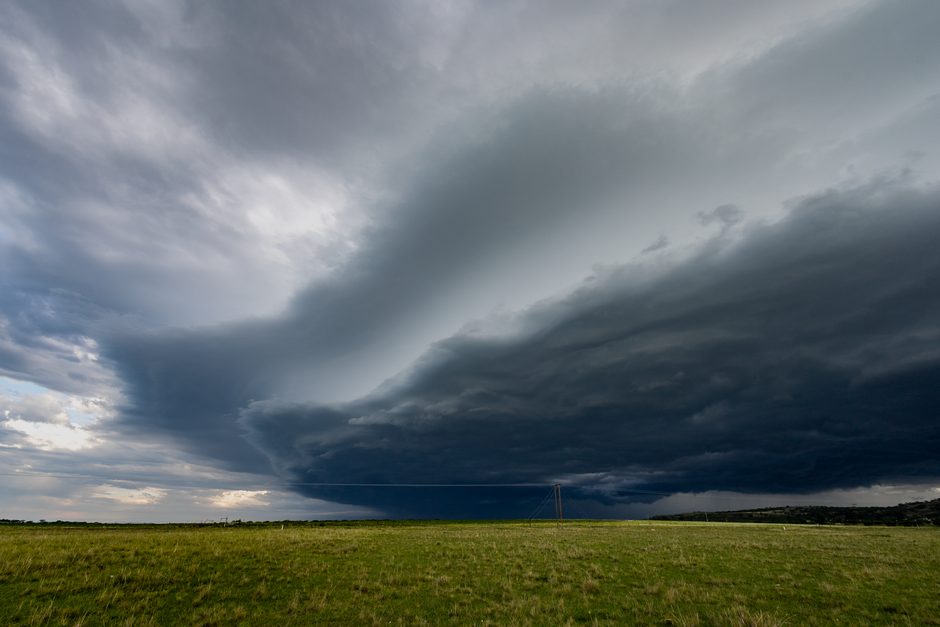
More Warnings, Not Necessarily More Storms
Across Canada, meteorologists have been sounding the alarm on tornadoes more often in recent years, but the actual number of confirmed twisters hasn't climbed at nearly the same rate. That gap between warnings issued and tornadoes verified on the ground is prompting a closer look at how the country's severe weather alert systems work, and whether the trend is something Canadians should welcome or worry about.
Better Tools, More Caution
Environment and Climate Change Canada, along with provincial weather partners, has steadily expanded its use of dual-polarization radar, storm-spotter networks, and rapid-alert technology over the past decade. These tools let forecasters detect rotation and other tornado signatures inside a storm cell earlier and with more confidence than older radar systems allowed. The tradeoff is that meteorologists are now more willing to issue a warning based on radar signatures alone, even before a tornado is confirmed on the ground by a trained spotter or storm-chaser.
That shift reflects a broader philosophy in severe weather forecasting: it's better to warn and be wrong than to stay silent and have a tornado catch a community off guard. Environment Canada's mandate leans heavily toward public safety, meaning the threshold for issuing a warning is deliberately set low when radar shows a storm capable of producing a tornado.
The Warning Fatigue Question
The flip side of that caution is a phenomenon meteorologists and emergency planners call "warning fatigue." When people receive tornado warnings repeatedly and a touchdown doesn't materialize, there's a risk they start tuning out future alerts, even the ones that matter most. Researchers who study public response to severe weather alerts have long flagged this as one of the trickiest balancing acts in emergency communication: warn too little and people get hurt, warn too often and people stop listening.
For Canadians living in tornado-prone corridors, including parts of southern Ontario, the Prairies, and southern Quebec. That balance matters. Ontario in particular sits within what's sometimes referred to as Canada's own "tornado alley," with a higher concentration of warnings and confirmed events than most other provinces.
What It Means Going Forward
Weather officials generally frame the rising number of warnings as a net positive, arguing that the cost of a false alarm is far lower than the cost of an unwarned tornado moving through a populated area. As detection technology keeps improving, the gap between warnings issued and tornadoes confirmed may persist or even widen, not because Canada is seeing more severe weather, but because forecasters are getting better at flagging the potential for it sooner.
For residents, the takeaway from experts remains consistent: treat every tornado warning as worth acting on, regardless of how many previous alerts didn't pan out. Having a plan: knowing where to shelter at home, work, or school, costs nothing, while ignoring a warning that turns out to be the real one can be catastrophic.
Source: CBC News