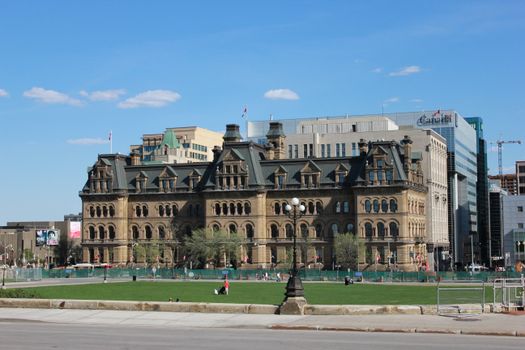
Ottawa is where the decision is being made to close the book on one of Canada's most defining international traditions. The Department of National Defence, headquartered right here in the capital, has confirmed it's shutting down four overseas peacekeeping missions and shrinking involvement in another, arguing that Canadian troops are needed elsewhere. For a country that spent decades building its global reputation around blue helmets and UN missions, the move signals the quiet end of an era, and it's federal officials working out of Ottawa who are steering that shift.
A legacy built, and wound down, in the capital
Canada's peacekeeping story has always run through Ottawa. It was in this city, back in the 1950s, that Lester B. Pearson helped pioneer the modern concept of UN peacekeeping during the Suez Crisis, a contribution that later earned him the Nobel Peace Prize and cemented peacekeeping as a point of national pride for generations of Canadians. So when the department responsible for the Canadian Armed Forces, based in Ottawa's downtown core near Parliament Hill, makes the call to fold up four of these missions, it's not just a bureaucratic footnote. It's a symbolic break from decades of policy shaped in this city.
Why the missions are ending
According to the Defence Department, the rationale comes down to competing priorities. Officials say Canadian personnel are increasingly needed for other commitments, including NATO deployments such as the ongoing troop presence in Latvia, which has drawn significant resources in recent years. Rather than spreading the Canadian Armed Forces thin across a shrinking roster of UN missions with limited troop contributions to begin with, the government appears to be consolidating its focus toward alliance-based defence commitments in Europe.
Critics push back
Not everyone in Ottawa's policy circles is on board with the shift. Critics argue that scaling back peacekeeping sacrifices something harder to quantify than troop numbers: influence. For decades, Canada's willingness to send personnel into UN missions gave it a seat at tables and a voice in international diplomacy that punched above its weight militarily. Some observers now warn that stepping back from that role leaves a vacuum other countries, notably China, which has steadily increased its own peacekeeping troop and funding contributions in recent years, are eager to fill.
What it means for Ottawa residents
For Ottawans, the debate isn't purely abstract. As the seat of federal government and home to National Defence Headquarters at Carling Avenue, this city is where thousands of public servants, analysts and military planners work through exactly these kinds of foreign policy trade-offs daily. The decisions rippling out from Ottawa's defence bureaucracy this year will shape how Canada is perceived internationally for years to come, a legacy question playing out just blocks from where Pearson first helped invent the very concept now being scaled back.
Source: CBC Ottawa