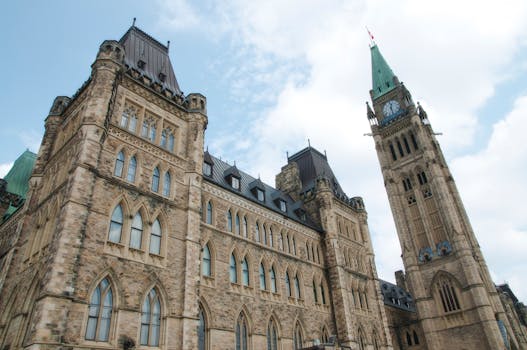
Ottawa's Parliament Hill was the site of an unusual set of hearings this week, as Conservative MP Dean Allison chaired four days of sworn testimony from Canadians who say a COVID-19 vaccine injured them.
Four days on the Hill
Allison's inquiry ran September 8 through 11, listening to testimony of Canadians injured by a COVID-19 vaccine. The sessions were broadcast live from Parliament Hill in Ottawa, and the inquiry was slated to hear from 50 vaccine-injured Canadians, including named witness Carrie Sakamoto.
Allison, an Ontario MP, said one of the biggest challenges has been that people haven't felt they have permission to talk about the issue. "I think one of the biggest challenges right now is that people have not felt they have permission to actually talk about this," he said.
Not an official inquiry
What happened on the Hill this week wasn't a government-sanctioned probe. Allison's inquiry is not sanctioned by the federal government, and it doesn't have the resources or ability to compel witnesses the way an official inquiry would.
According to the Allison Inquiry itself, the sessions were billed as "a preliminary inquiry to create a neutral forum for Canadians to share their personal experiences of injuries to themselves, or to others, from the Covid-19 vaccine(s)," with the stated purpose being to listen, not to issue findings. The hearings were held with the cooperation of the Covid Testimony Association, a not-for-profit set up to help run the inquiry.
Support and skepticism
The hearings drew reaction from other MPs and from at least one physician. Liberal MP Mark Gerretsen said anybody who believes they've been affected by taking a vaccine deserves to be heard and deserves compassion and support.
"Like anything else, if the results are written before the study's even done, you have to ask yourself what good is the study in the first place?" Bogoch said.
The Ottawa angle
For Ottawa residents, the hearings were a rare case of a politically charged, informal inquiry playing out in person on Parliament Hill rather than in a committee room or courtroom elsewhere in the country. Because Allison's process has no power to compel witnesses or produce binding findings, its impact will likely come down to how the testimony gathered this week is used going forward, whether that's in public debate, in future policy pushes from Allison and his allies, or simply as a record of personal accounts from people who say they were hurt.
Sources: CP24, Allison Inquiry (official)