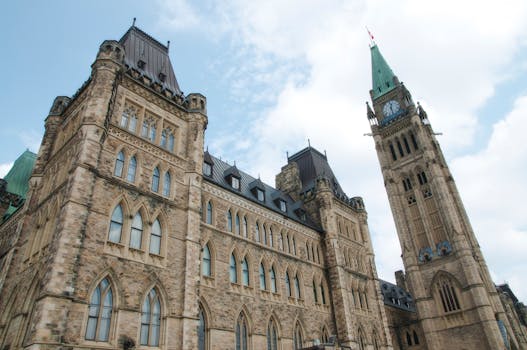
Ottawa is home to tens of thousands of federal public servants, which is exactly why a newly formed task force of former CEOs and senior bureaucrats is turning heads across the National Capital Region this week. The nine-member group has been assembled to give the federal government independent advice on how to reform and modernize the public service, the same institution that employs a huge share of the city's workforce and shapes daily life in neighbourhoods from Barrhaven to the Byward Market.
Who's on the task force
The group brings together some heavyweight names from both the corporate world and the upper ranks of government. Members include Ian Anderson, former president and CEO of Trans Mountain Corporation; Peter Wallace, former secretary of the Treasury Board of Canada and former head of the Ontario Public Service; and Jody Thomas, former deputy minister of national defence and national security adviser to Prime Minister Justin Trudeau. Rounding out the nine-person roster are additional former deputy ministers with deep experience navigating the machinery of government from the inside.
What they're actually looking at
Rather than a broad, vague mandate, the task force says it's zeroing in on three priority areas: digital government and AI, major projects, and Arctic sovereignty. The goal is to help Ottawa simplify decision-making, improve coordination between departments, and bring the public service into the modern era, something that matters directly to the local economy given how much of it revolves around federal employment and contracting.
Why this matters for Ottawa
For a city where entire neighbourhoods, transit patterns, and local businesses are built around the rhythms of the federal workforce, any serious reform effort inside government departments has ripple effects. Faster, more coordinated decision-making in Ottawa's federal offices could mean quicker movement on major infrastructure and technology projects that touch the capital region, from digital services upgrades to procurement processes that local firms depend on. Public service modernization conversations tend to circulate widely among Ottawa's civil servant community, and this task force's work will likely be closely watched by unions, departmental staff, and policy wonks across the city over the coming months.
The mandate and who's funding it
The task force says it has a one-year mandate to do its work, after which it will present its recommendations. Its efforts are being financially backed by a mix of philanthropic organizations, including the Clean Economy Fund, the Hewitt Foundation, the Ivey Foundation, and the Jarislowsky Foundation, a sign that the initiative sits outside formal government funding, positioning it as an independent voice rather than an internal review.
What comes next
With a year on the clock, Ottawans working in and around the federal government should expect to hear more about this task force's specific recommendations as they take shape. Given the scale of the federal presence in the capital, any resulting shifts in how decisions get made, particularly around digital transformation and major project approvals, could be felt well beyond the Hill.
Source: CTV News