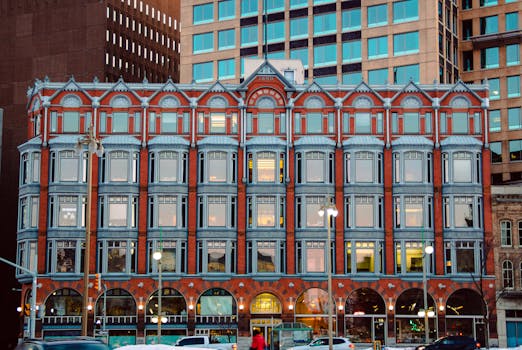
Ottawa's commercial real estate sector is finally catching its breath after a few turbulent years, with a new report from Avison Young describing the current climate as one of "cautious momentum." For a city that's seen its downtown core hollowed out by remote work and its tech sector rattled by layoffs, that's cautiously good news.
What's driving the shift
According to Avison Young's latest market outlook, Ottawa's commercial landlords and investors are starting to see stabilization after several quarters of uncertainty. Vacancy rates that spiked as federal government employees and tech workers shifted to hybrid schedules appear to be leveling off, and investors who sat on the sidelines through 2024 and 2025 are starting to re-enter the market, carefully.
The report points to a mix of factors behind the shift: interest rates that have stopped climbing, a federal government slowly working out its own real estate footprint, and Ottawa's relative affordability compared to Toronto making it more attractive to institutional buyers looking for value.
Why this matters for Ottawa
Commercial real estate isn't just a numbers story for investors. It shapes what downtown Ottawa looks like day to day. Office vacancy has been one of the biggest headaches for the city's core, with empty towers along Slater and Albert Streets sitting as visible reminders of the shift to hybrid work. Any sign of stabilization matters for the businesses, restaurants, and shops that depend on foot traffic from office workers.
It also matters for the city's tax base. Ottawa relies heavily on commercial property assessments to fund municipal services, and prolonged vacancy or falling property values can put pressure on the budget, pressure that often gets passed down to residential taxpayers. A more stable commercial sector means more predictable revenue for the city.
Kanata North, home to Ottawa's tech corridor, is also worth watching here. As one of the city's key commercial hubs outside the downtown core, any renewed investor confidence could translate into new development or leasing activity for the tech companies and startups clustered there.
Cautious, not confident
The key word in Avison Young's assessment is "cautious." Nobody's calling this a boom. Industrial space, which stayed relatively resilient through the downturn thanks to demand from logistics and light manufacturing, continues to be the strongest performing asset class in the region. Retail is mixed, with well-located neighbourhood plazas outperforming struggling downtown storefronts. Office remains the wild card, with landlords increasingly looking at conversions, turning underused office towers into residential units, as a way to adapt.
For Ottawa residents, the takeaway is less about spreadsheets and more about what it signals: a downtown that's been struggling to find its footing since the pandemic may finally be finding some stability, even if the recovery is slow and uneven.
Source: Ottawa Business Journal